
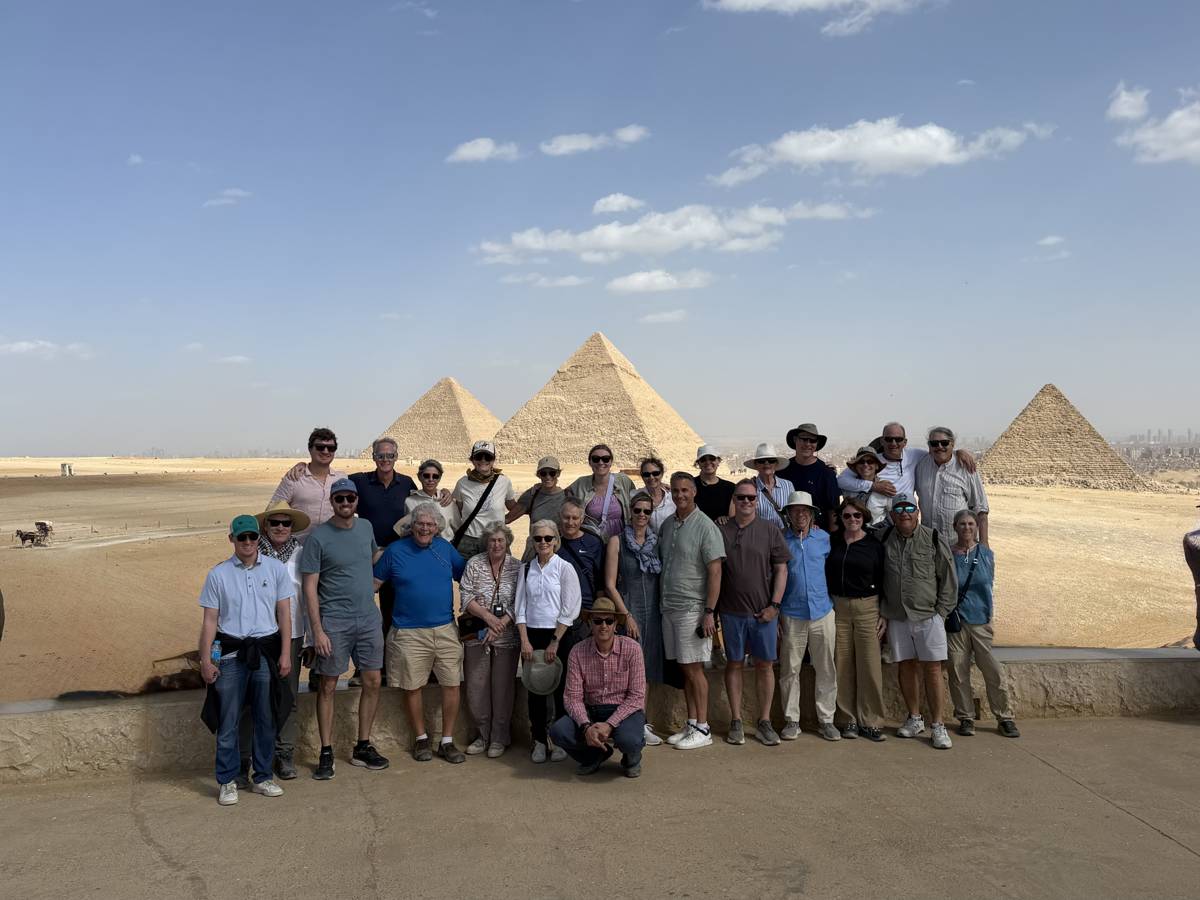
Luxury Egypt Tours: A 12-Day Journey Through 5,000 Years of History
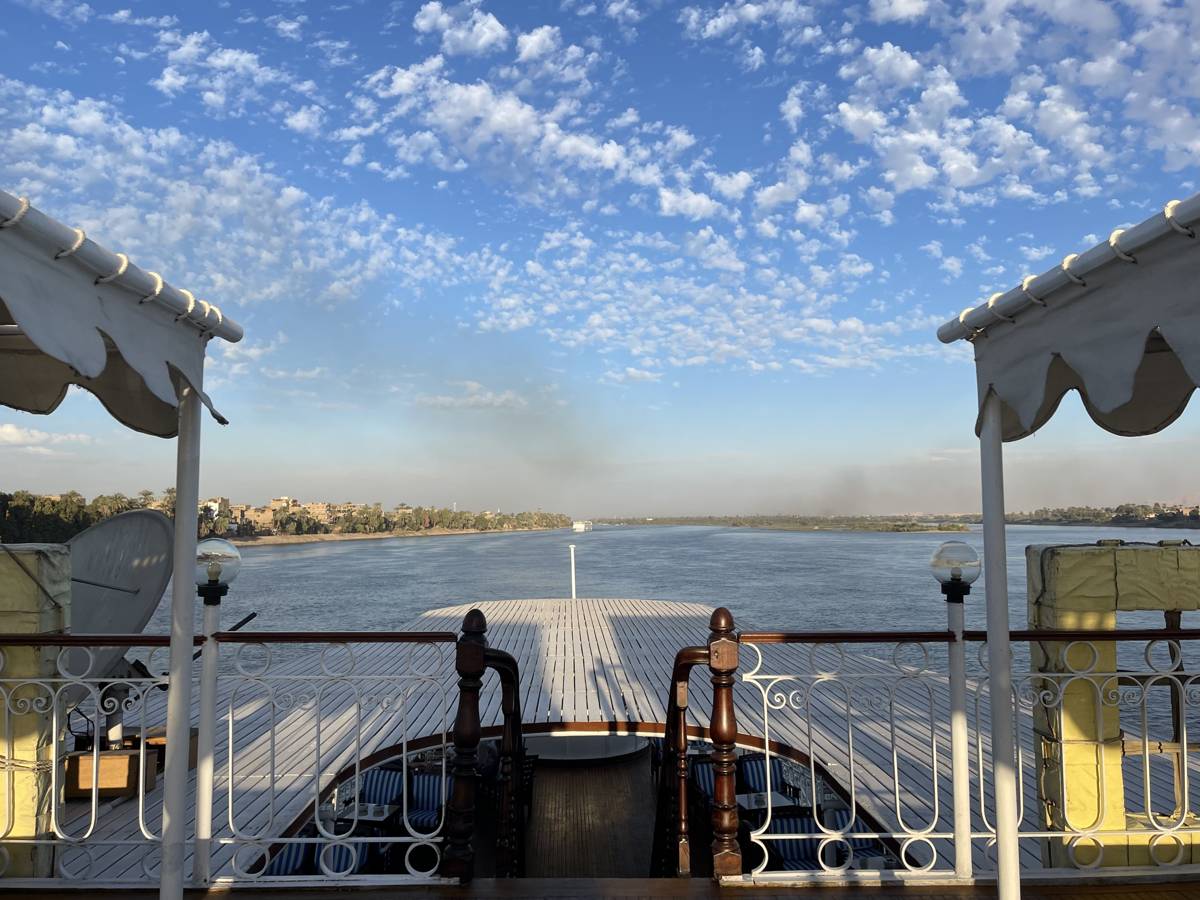
Imagine you are standing on the deck of a 1917 steam ship with a glass in your hand and an Egyptologist beside you who just spent the afternoon explaining why the carvings on those columns still matter. And you’re about to see a special moment on the Nile, just before sunset. The light turns everything gold. The riverbank, the palm trees, the temple columns that have stood since before Rome was a city. And the air smells like warm stone and water.
You’re not being rushed. You’re simply taking it in. The surreality may be coming over you that you’re looking at actual ancient history. But you’re definitely thanking your past self for finally booking the trip at the top of your list for years.
This is what the best tours of Egypt actually feel like. No checklist or shuffling through crowded hallways with a guide holding a numbered sign. And it’s surely not a 7-day “experience” where you see the Pyramids from a bus window and head home.
You have 12 days. A private Egyptologist will stay with your group from the first morning in Cairo to the last afternoon at the Sphinx. Seven nights aboard the SS Karim, a restored 1917 Nile steam ship chartered exclusively for your group. Karnak at sunrise. The wonder of the tomb of Seti I. Abu Simbel by plane. The Grand Egyptian Museum.
If you’ve always wanted to go to Egypt, this is how you do it and give it its due.
Not on a cruise ship with 200 strangers (maximum of 28, no packing you in like sardines or herding you like cattle from site to site). Not on a bus tour that hits the highlights and skips the meaning. You’re with someone who has built this itinerary over years of leading travelers through these temples, along this river, and into the heart of a civilization that shaped every civilization after it.
This is one of the best trips to Egypt you will find anywhere. When we say “luxury,” we don’t mean a resort with a spa and turn-down service. We mean a privately chartered 1917 steam ship that once carried kings. A private Egyptologist who stays with your group for 12 days. Exclusive access to sites most tours walk past. This is the kind of luxury that’s about what you experience, not what your room looks like. That difference shows up in every single day of this trip.
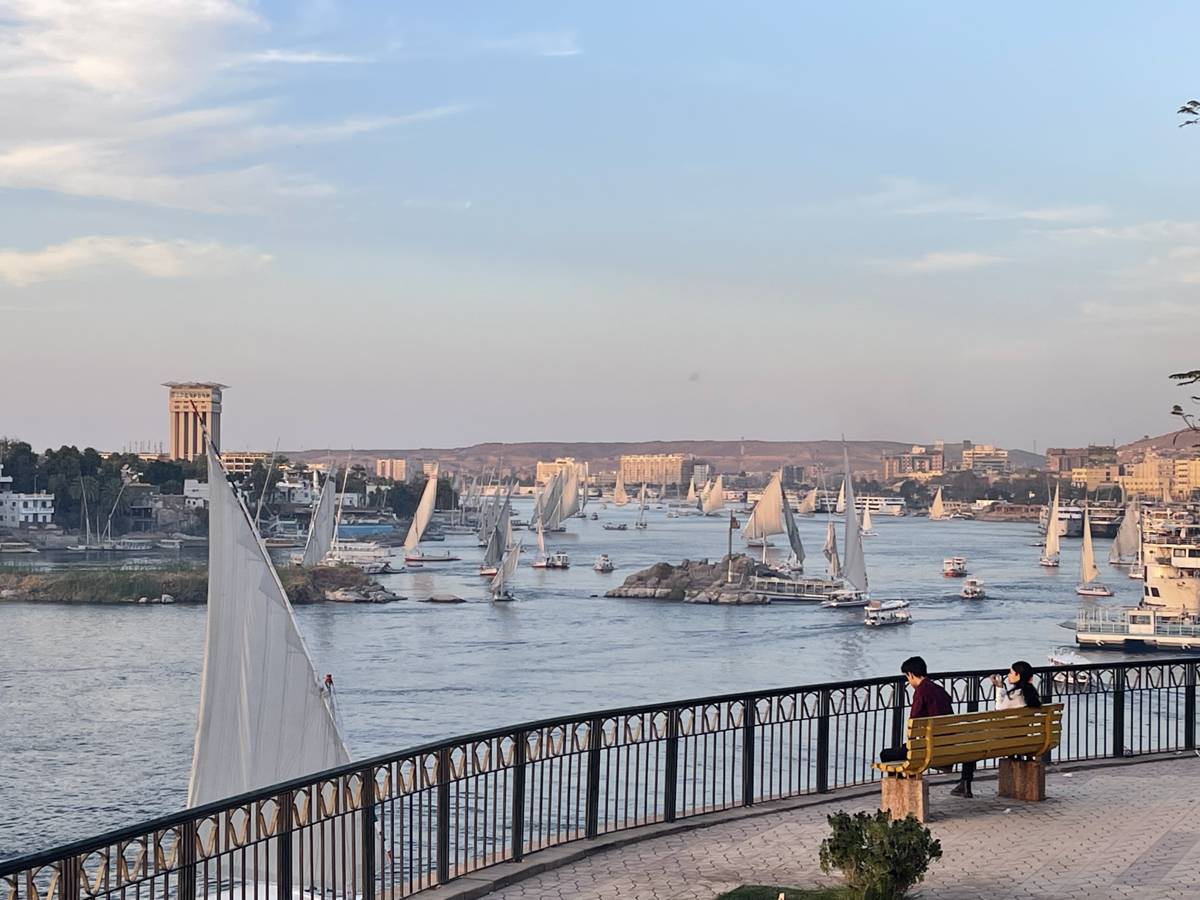
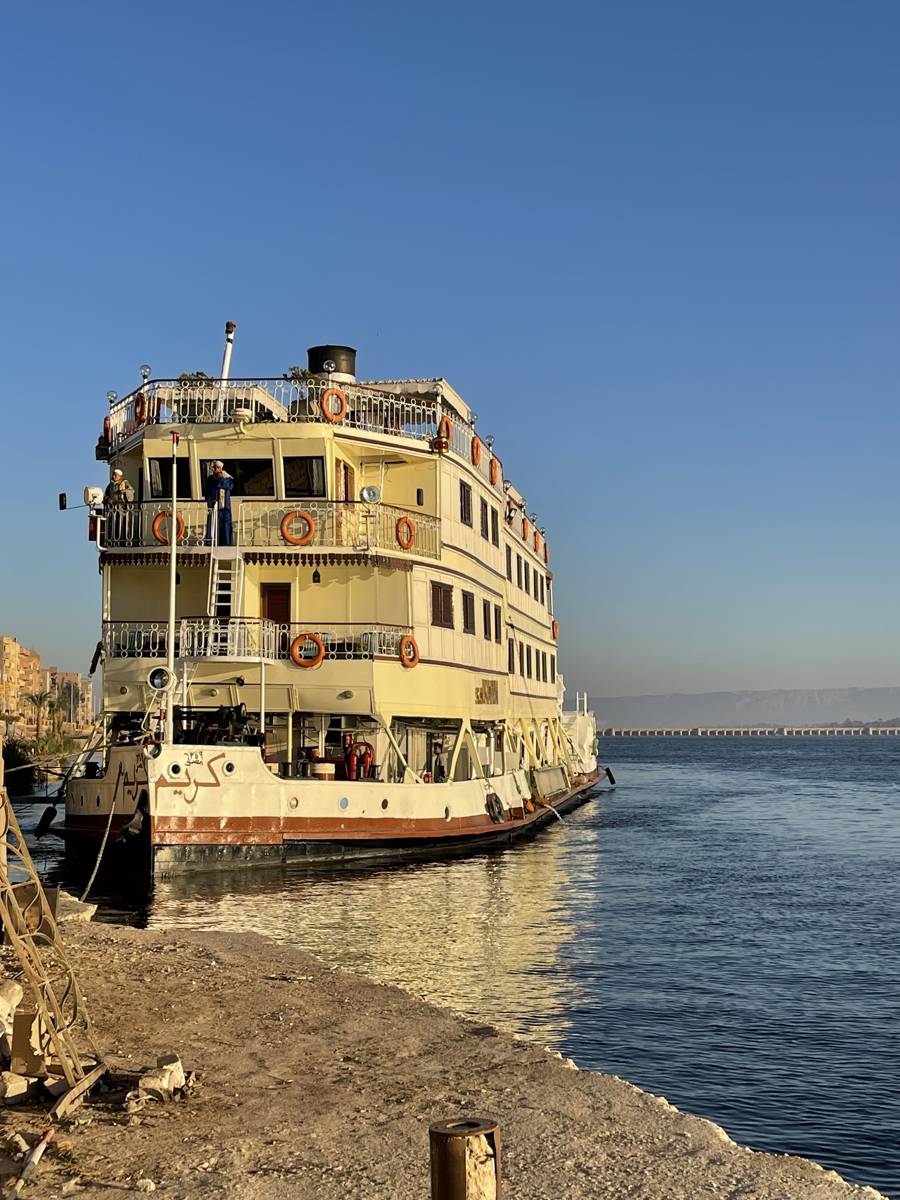
What Is It Like to Cruise the Nile on a Private 1917 Steam Ship?
When most people imagine a Nile cruise, they picture something Viking-shaped. A large ship, a standard buffet dinner, a rotating guide who meets your group at the dock with a clipboard and disappears by sundown. Comfortable. Predictable. And completely interchangeable with the ship docked next to it (trust us, we see them cruising past us from the SS Karim and they are taking pictures of our amazing ship).
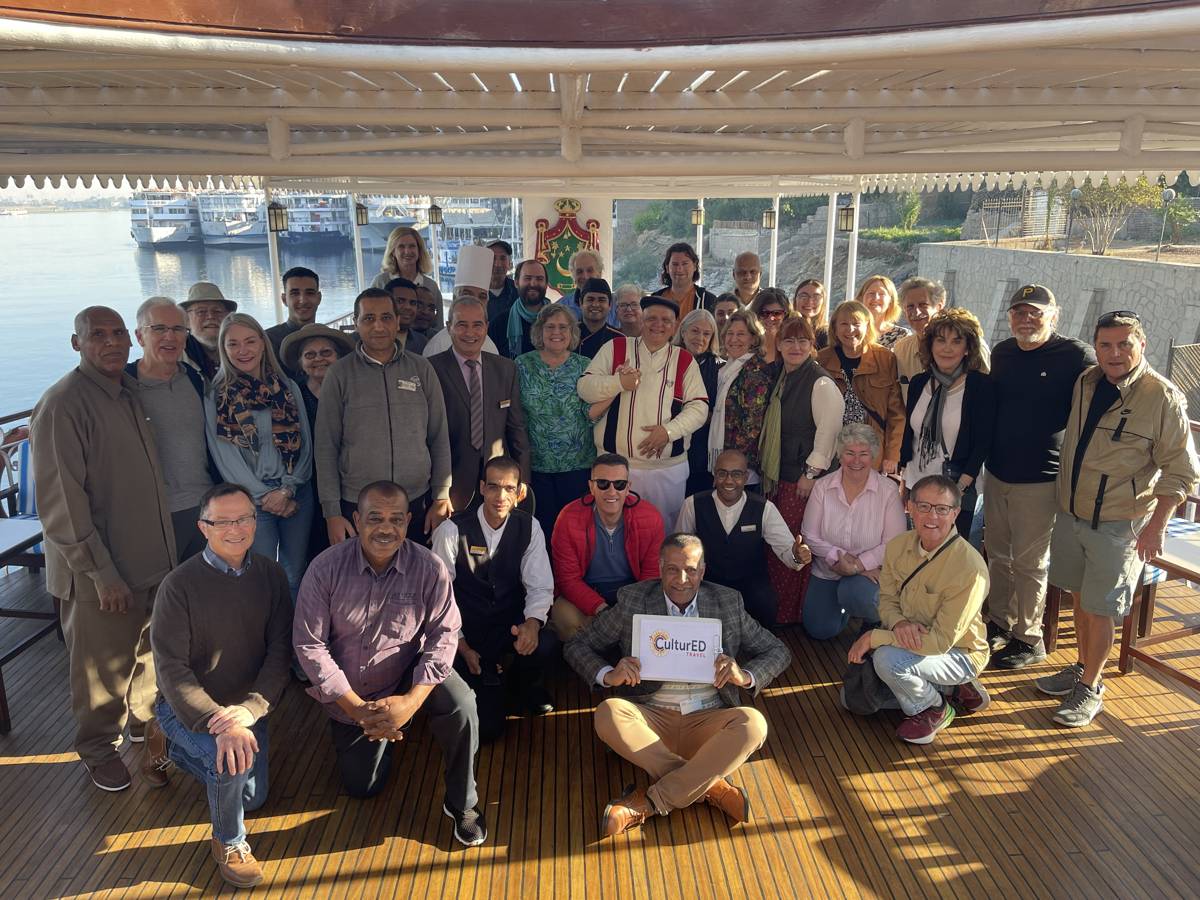
The SS Karim is a different vessel in every sense. Restored from its 1917 origins, once owned by King Fuad I and King Farouk, it sails Luxor to Aswan and back carrying just you and your group. Cultured Travel charters the entire ship. No shared dining rooms. No strangers in the hallway. Seven nights on a vessel with more history in its hull than most museums have on their walls.
One past traveler described it best, “It’s like taking a 1920s Rolls Royce for a ride.” The cabins aren’t sprawling suites with marble bathrooms. The luxury here is that the entire ship is yours. A royal vessel, a private charter, your Egyptologist at dinner, the Nile outside your window. That’s the kind of luxury you can’t buy on a 200-passenger cruise ship no matter how big the room is.
The SS Karim could steal the spotlight on any itinerary, but it won’t. The temples along this route, Karnak, Edfu, Kom Ombo, Esna, Philae, and the Unfinished Obelisk earn that on their own. So does the Egyptologist who has been building the story of this civilization day by day since Cairo. The ship’s job is to carry you between those moments in a way nothing else can. To put the Kom Ombo Temple outside your window at sunrise instead of a parking lot. To bring you back from high tea at the Old Cataract Hotel in Aswan and onto a deck where the same people you have been laughing with all week are already saving you a chair.
The SS Karim sails that same Luxor-to-Aswan corridor with a stop in Aswan before flying to Abu Simbel. Your Egyptologist won’t simply drop by for a lecture. You’ll eat breakfast together. You’ll be enjoying the same sunset on deck after dinner. They’re the person you can count on to tell you the story carved into the column you’re staring at.
Is Egypt Safe for American Tourists?
Yes, Egypt is safe for American tourists, and it has been for years. The U.S. State Department advises increased caution, which is the same advisory level it assigns to dozens of popular travel destinations. The areas you will visit on this trip, Cairo, Luxor, Aswan, and the Nile corridor, are heavily patrolled, well-organized tourist zones that welcome millions of international visitors every year.
Perhaps after divulging your plans to Egypt a loved one has asked, “Are you sure about this?” Or because you Googled this very question at midnight (which is completely reasonable). Safety is not a silly concern.
Cultured Travel will always send a tour director on your trip. The ones planning it are the same ones walking beside you the entire trip. We would never plan, promote, or execute a trip to any destination we believed was unsafe. We’ve walked these streets, navigated these airports, and sat at these restaurant tables. We know the ground-level reality, not just the headline.
On this trip, you travel with private transportation, local guides who know every neighborhood, vetted hotels, and a group structure that keeps everyone together and accounted for. You are never wandering alone through an unfamiliar city unless you choose to be.
Can Americans travel to Egypt? Absolutely.
Thousands do every month. Is Egypt safe for women? Jewel is a woman who has led multiple of these trips to Egypt (and that should tell you everything you need to know).
When Is the Best Time to Visit Egypt for a Nile Cruise?
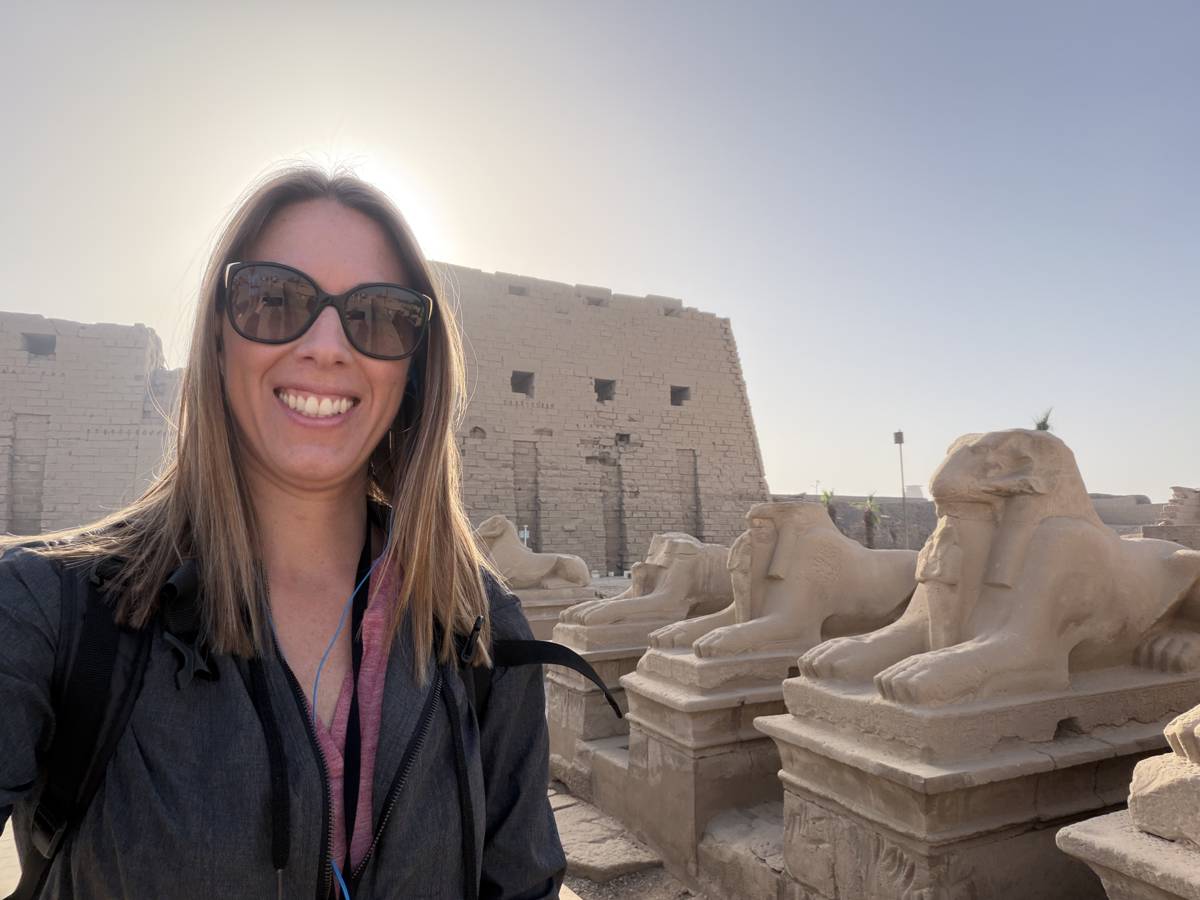
October through April is the ideal time. That is when temperatures drop from stifling to beautiful, the Nile is calm, and you can stand inside a temple for 20 minutes without feeling like the sun is personally coming for you.
Inside that window, the months have different personalities. December through January is the peak season. Holiday travelers flood in. Prices spike. Popular sites feel crowded. You wait in lines at Karnak. You jostle for position at the Sphinx. The experience is fine, but it is not the unhurried, immersive version of Egypt that stays with you for years.
February and March are quieter. The weather is mild, the crowds thin out, and the sites start to feel like they belong to you again. October and November sit on the other side of summer, right before the holiday rush, with warm days, cool evenings, and some of the best photography light of the year.
Departure dates are selected based on which part of that window delivers the best experience for the trip. Sometimes that is early in the season. Sometimes it is late. The constant is that we have traveled Egypt across multiple months and know the difference between a good time to visit and the right time to visit.
How Much Does a 12-Day Luxury Egypt Tour Actually Cost?
For 2027, it’s $7,605 per person. And before you compare it to the $3,500 Egypt tours you have seen elsewhere, look at what is actually inside that number.
What $7,605 Covers
Included is:
- Seven nights aboard the SS Karim, privately chartered for your group
- Four nights in Cairo hotels (one night at the Hilton Cairo Heliopolis and three nights at the Marriott Zamalek)
- A private Egyptologist who stays with your group for all 12 days
- Every domestic flight within Egypt
- Every entrance fee to every archaeological site on the itinerary (including some with exclusive access)
- Your visa (for U.S. citizens). All airport transfers and luggage handling
- Most meals throughout the trip
- High tea at the Old Cataract Hotel in Aswan
What Is Not Included
Not included is:
- International airfare to and from Cairo
- Alcohol
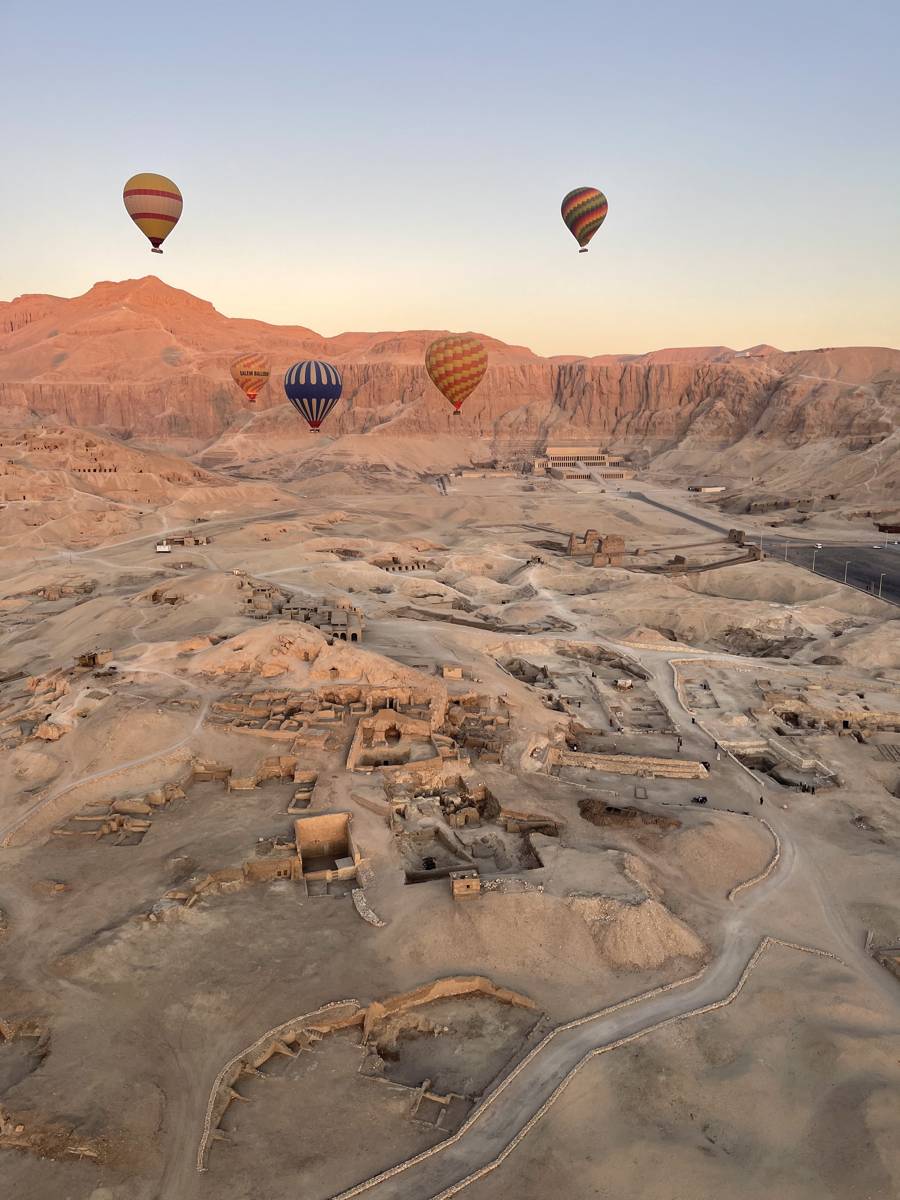
- Optional hot air balloon ride over the Valley of the Kings (cost to be determined)
- Optional Giza Sound and Light Show
- Gratuity ($300 to $400 USD recommended)
A budget trip to Egypt at $3,000 to $4,000 sounds cheaper until you add the entrance fees that aren’t included. Domestic flights you’re charged for separately. The guide who rotates every two days because they are shared across multiple groups. The Nile cruise on a 200-passenger ship where you’re one of hundreds. By the time you stack up what a budget trip actually costs with everything you are paying out of pocket, you are at $6,000 to $7,000 for a significantly worse experience.
The difference between $7,605 with nearly everything covered and $4,000 with a list of surprises is not a price gap. It is a quality gap.
And on a trip you may take once in your life, that gap matters more than the number.
How Many Days Do You Really Need in Egypt?
Five days gives you Cairo. You see the Pyramids, you walk through a museum, and you fly home feeling like you barely scratched the surface … because that’s all you did.
Seven to eight days is the standard. It is what most tour companies sell because it fits neatly into a week of vacation time. You’ll be paraded on and off a bus to the highlights. You skip Abu Simbel because there is no time. You rush through Cairo because three days got compressed into one and a half. Sure you saw Egypt, but you’ll leave wondering what you missed.
Ten days is better because it gives you a little breathing room. But you are still compressing the Cairo portion, which means you are choosing between the Grand Egyptian Museum and the National Museum of Egyptian Civilization instead of doing both. And you never get that unhurried morning at Saqqara and the Pyramids that changes the way you see them forever.
Twelve days is the full arc. This 12-day Egypt tour gives you the complete story, told in the right order by someone who knows how to tell it.
The Shape of the Trip
Day 1: Arrive Cairo. Settle into the Hilton Cairo Heliopolis. The trip begins tomorrow.
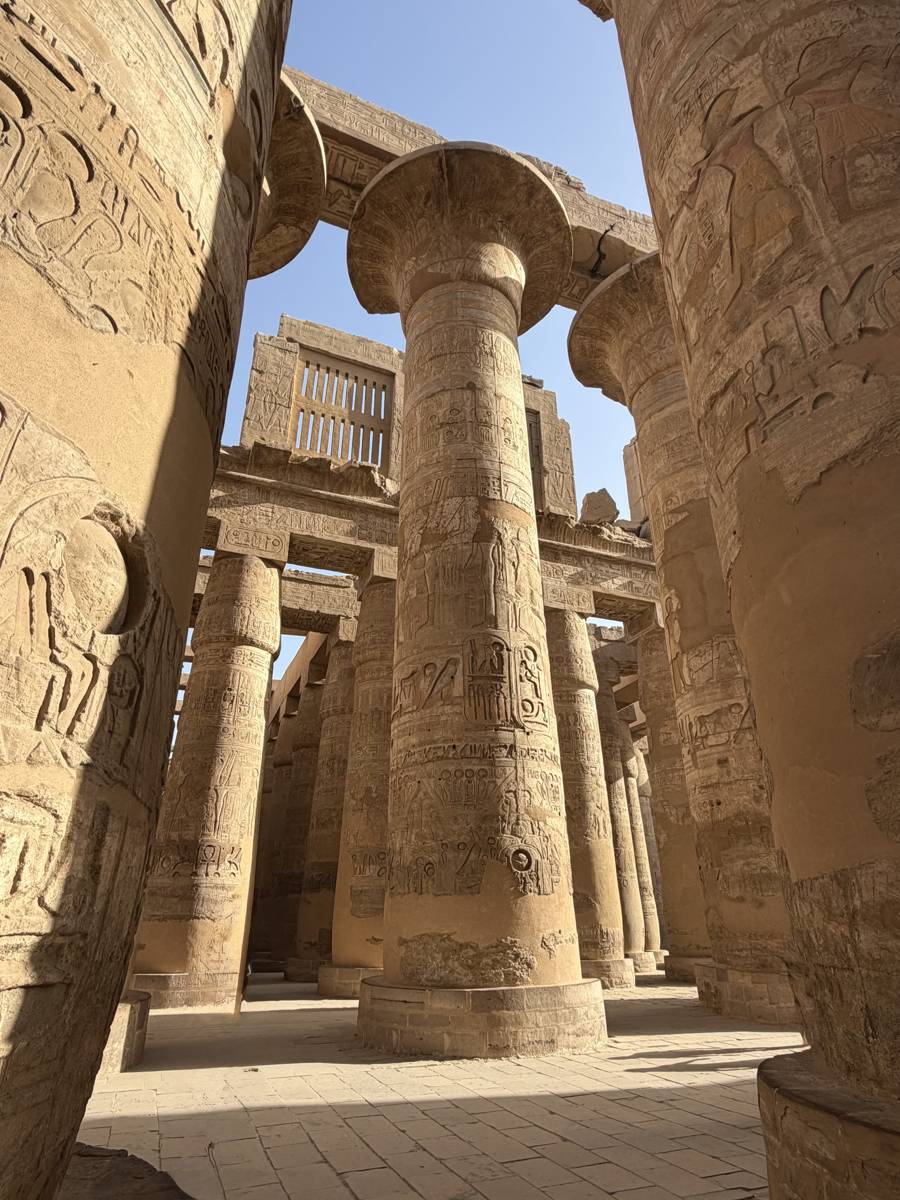
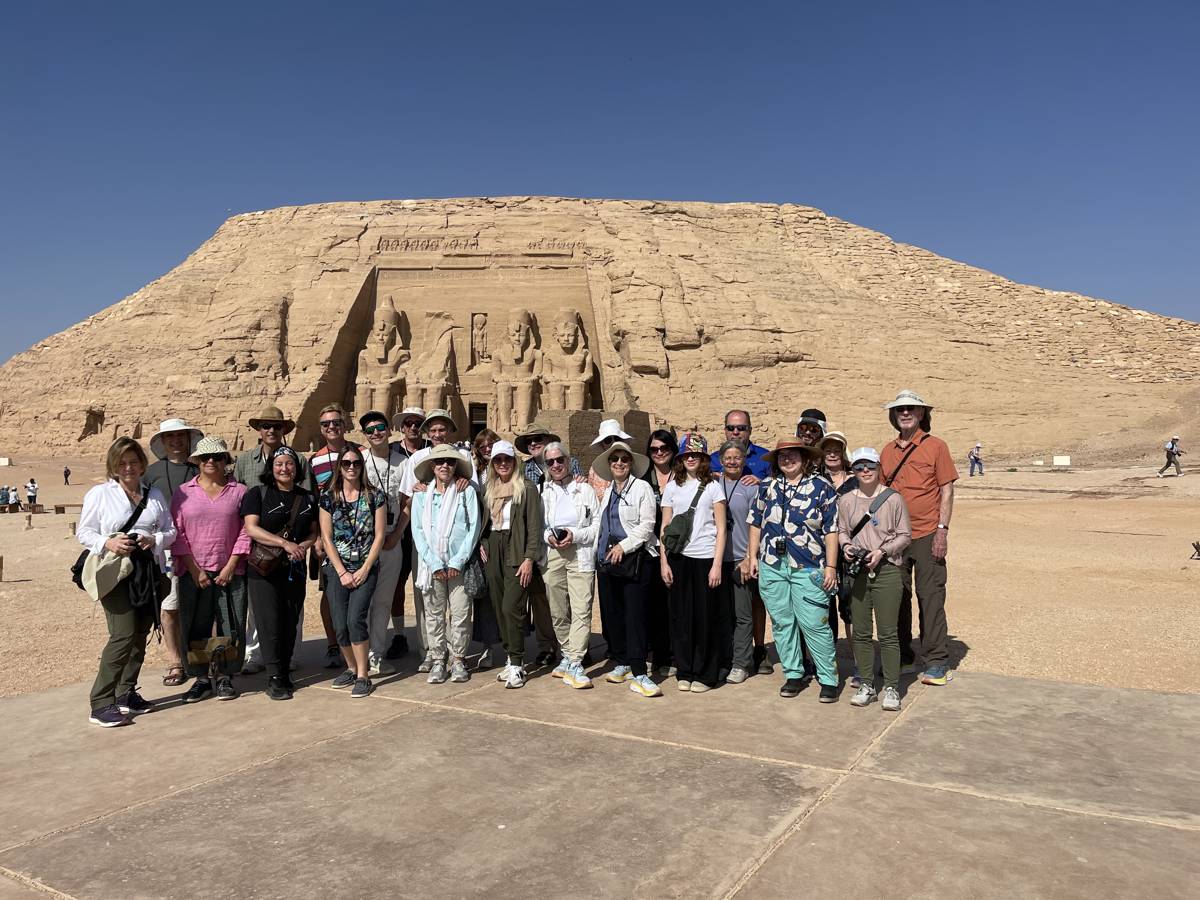
Days 2 through 8: Fly to Luxor. Board the SS Karim. Over seven days on the Nile, you visit Karnak Temple, Luxor Temple, the Valley of the Kings, Edfu, Kom Ombo, Esna, Philae Temple, the Unfinished Obelisk, and Abu Simbel (by plane from Aswan). Your Egyptologist builds the narrative day by day. Each temple connects to the last. The history stops being a list and starts being a story.
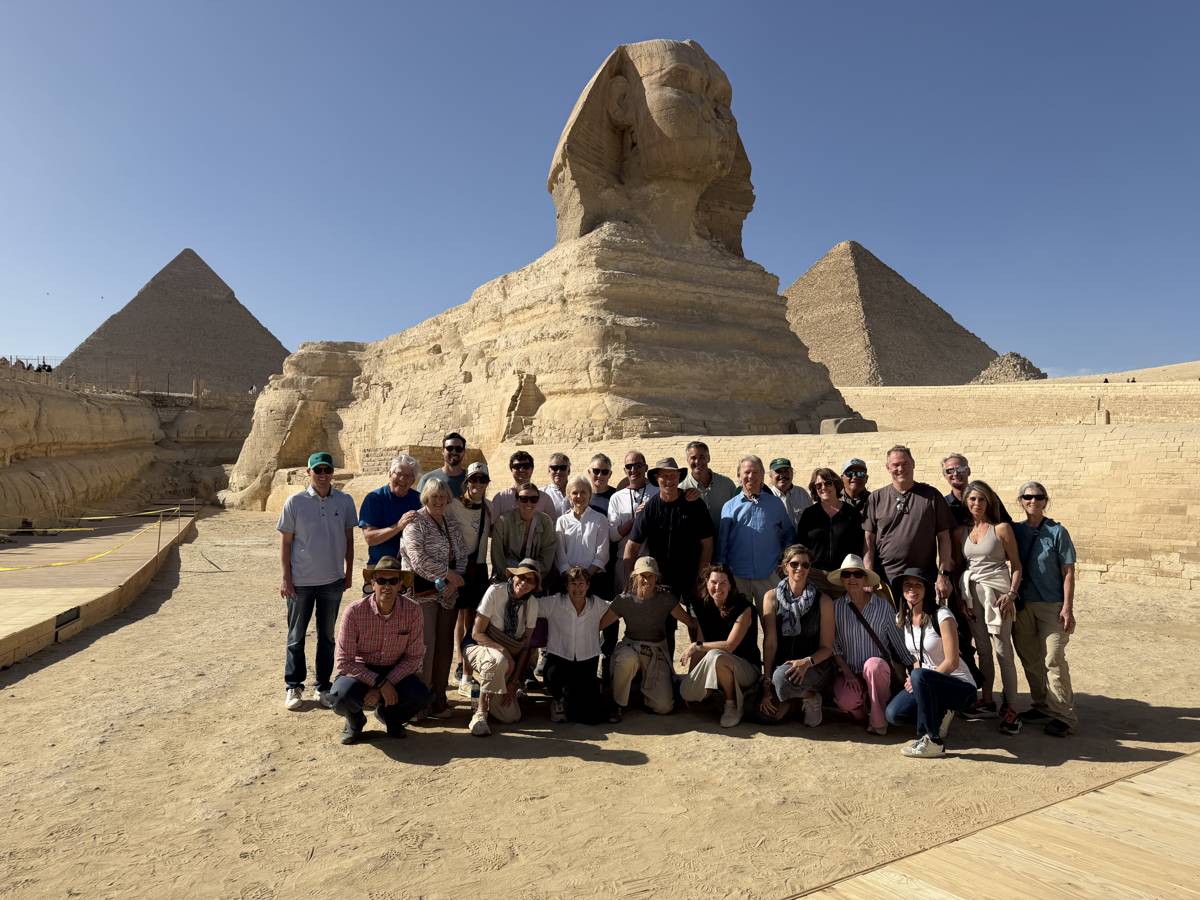
Days 9 through 11: Fly back to Cairo. Check into the Marriott Zamalek. Spend the better part of a day at the Grand Egyptian Museum, visit the National Museum of Egyptian Civilization, and explore the Pyramids of Giza, the Sphinx, and Saqqara.
Day 12: Departure. You leave knowing you did not just see Egypt. You understood it, and you can now say you have friends who live there.
Who Books an Egyptologist-Led Tour of Egypt?
People who read. People who watch documentaries and then wish they could walk into the screen. People who have been on the big-bus tour and know there has to be something better. People who want to ask the guide a question and actually get a real answer, not a rehearsed script.
You want to invest in a meaningful experience, and you are not interested in roughing it. You want depth, not speed. You would rather spend 20 minutes understanding one wall of hieroglyphs than photograph ten temples and remember none of them.
There is enormous demand right now for Egyptologist-led archaeological tours of Egypt. People want what the famous celebrity-led tours promise, a real expert walking you through 5,000 years of history, but without the $15,000 price tag and the photo-op format.
Which is exactly what you’ll get on this trip.
This trip is designed for adults. Couples, solo travelers, and small groups of friends who want an immersive educational experience, not a family-friendly itinerary with kid-paced days (although mature kids may be able to handle it).
One more thing. Many travelers on Cultured trips are repeat customers. Some have even done this particular trip more than once, or they came for one destination and came back for another. That tells you more about the experience than any sales page ever could.
Frequently Asked Questions About Traveling to Egypt
Is Egypt safe for American tourists?
Yes. Egypt’s major tourist destinations, including Cairo, Luxor, and Aswan, are well-patrolled and organized for international visitors. The U.S. State Department advises increased caution, which is the same level assigned to many popular travel destinations worldwide. On this trip, you travel with private transportation, vetted hotels, and a group structure that keeps everyone together unless you want to venture out on your own in certain places. You’ll be personally led by a Cultured Travel representative with your group through Egypt. Read the full safety section above for more detail.
How much does a trip to Egypt cost?
This 12-day trip is $7,605 per person. That covers your private Nile charter aboard the SS Karim, all hotels in Cairo, a dedicated Egyptologist for 12 days, every domestic flight, every site entrance fee, your visa (U.S. citizens), most meals, airport transfers, and high tea at the Old Cataract Hotel in Aswan. International airfare, alcohol, optional excursions, and gratuity ($300 to $400 recommended) are not included. Compared to budget Egypt tours that charge separately for flights, guides, and entry fees, the actual cost difference is smaller than it looks.
When is the best time to visit Egypt?
October through April offers the best weather for sightseeing. Temperatures sit between 70 and 80 degrees Fahrenheit, rain is rare, and the December holiday crowds have not arrived yet. This trip is always planned to land right in the ideal window for comfortable temple visits, calm Nile cruising, and excellent photography light.
Do I need a visa to travel to Egypt?
Yes. U.S. citizens need a tourist visa to enter Egypt. Good news, your visa is included in the trip price. CulturED Travel handles it so you do not have to navigate the process yourself. One less thing to think about before you board the plane.
Is Egypt safe for women travelers?
Jewel Rozanski, managing partner of Cultured Travel, is a woman who has walked these streets, stayed in these hotels, and explored these temples herself many times. This itinerary was developed from firsthand experiences and she would never send travelers somewhere she considered unsafe. Every trip includes a Cultured Travel tour director who knows the ground as well as she does. You are never alone unless you choose to be.
How physically demanding is this trip?
Moderate. You will walk through temples, climb steps at archaeological sites, and spend full days on your feet in warm weather. The pace is steady but not punishing. There is no hiking or strenuous activity. Temple floors can be uneven, and some sites involve stairs without handrails. If you can walk comfortably for 60 to 90 minutes at a time with breaks, you will be fine.
What should I pack for Egypt?
Light layers. Daytime temperatures during travel season (October through April) are warm, but mornings on the river can be cool. Comfortable walking shoes are non-negotiable. A hat, sunscreen, and sunglasses go without saying. Bring a light jacket or scarf for evenings on deck. Egypt uses Type C and Type F power outlets, so pack a travel plug adapter. Modest clothing is respectful at religious sites.
What makes this different from a Viking or Road Scholar Egypt tour?
Three things. First, Viking runs 200-plus passenger ships on the Nile. CulturED Travel charters the SS Karim, a restored 1917 steam ship, exclusively for your group. Second, Road Scholar and Viking rotate guides at different sites. CulturED provides one private Egyptologist for all 12 days, building the narrative from beginning to end. Third, up to 28 travelers including your tour director versus 40 or more. Smaller group, deeper experience, more access.
What is the SS Karim?
A restored 1917 Nile steam ship, reportedly once owned by King Fuad I and King Farouk. Cultured Travel charters the entire vessel for seven nights during the Luxor-to-Aswan portion of the trip. It carries only your group. A private floating hotel with over a century of history on the Nile.
Is this trip customizable?
Not typically. The itinerary is fixed. This is by design. Cultured Travel refined this route over multiple trips based on what works, what flows, and what creates the most meaningful experience. The order of the sites, the pacing of the days, and the balance between structured time and free time have all been tested. You are not buying a template. You are joining a journey that has been built through experience. If you have your own group of 20+ travelers, reach out and customization may be possible.
How do I get from Cairo to the Nile?
Domestic flight. On Day 2, you fly from Cairo to Luxor, where you board the SS Karim. The flight is included in your trip price. At the end of the Nile portion, you fly from Luxor back to Cairo for three days of exploring the city. Both flights are covered.
What is the Grand Egyptian Museum?
The largest archaeological museum in the world, opened near the Giza Pyramids. It houses over 100,000 artifacts, including the complete Tutankhamun collection, and replaces the older Egyptian Museum in downtown Cairo as the primary destination for Egypt’s ancient treasures. This trip gives you a full day there, not the rushed two-hour visit most shorter tours squeeze in.
Do I need travel insurance for Egypt?
It is strongly recommended. Medical care in Egypt’s tourist areas is adequate, but evacuation coverage gives you peace of mind if something unexpected happens. Cultured Travel can point you toward reputable providers, and most policies for a 12-day trip are surprisingly affordable relative to the cost of the trip itself.
What is included in the trip price?
Nearly everything. The private charter of the SS Karim for seven nights. Four nights in Cairo hotels (Hilton Cairo Heliopolis and Marriott Zamalek). A private Egyptologist for 12 days. All domestic flights within Egypt. All entrance fees. Visa for U.S. citizens. Airport transfers and luggage handling. Most meals. High tea at the Old Cataract Hotel. Not included are international airfare, alcohol, optional excursions (hot air balloon, Giza Sound and Light Show), and gratuity. Full breakdown in the cost section above.
Ready to See Egypt the Way It Deserves to Be Seen?
You have read the itinerary. You know the cost. You know who is leading the trip and what makes this different from everything else out there. The only question left is whether you are ready.
If you have questions, reach out to us!