
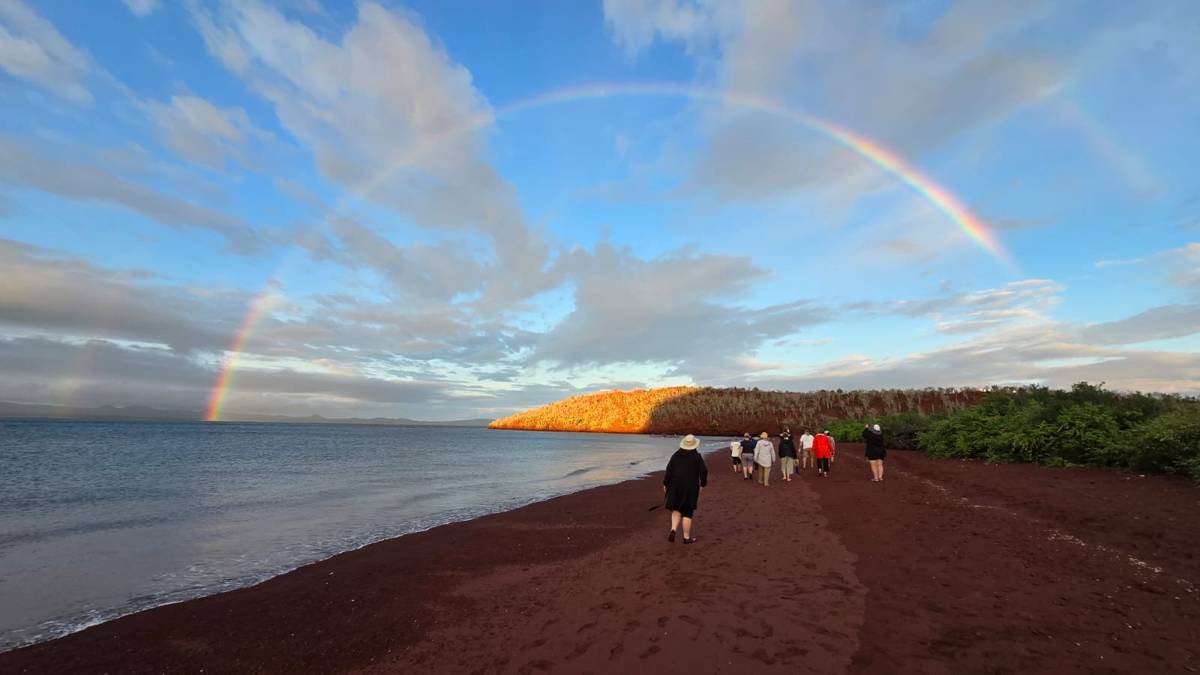
Small Boat Galapagos Cruise: 10 Days Among the Animals That Changed Science
You are sitting on the deck of a 16-passenger catamaran, coffee in hand, watching a frigatebird ride a thermal fifty feet above the water. The naturalist beside you is explaining how male frigates inflate a bright red throat pouch the size of a basketball to attract a mate. Behind you, someone in your group is laughing because a sea lion just hauled itself onto the swim platform like it owns the place. And in two hours you will be snorkeling with sea turtles in water so clear you forget you are wearing a mask.
You get to float through the archipelago that rewired our understanding of life on Earth, and you have ten days to take it in.
A small boat Galapagos cruise where the group is small enough that you know everyone by name, the naturalist guide is yours for the entire trip, and a Cultured Travel tour director is on the boat with you from start to finish.
Cultured Travel runs one Galapagos departure per year. Sixteen travelers. A certified multilingual naturalist guide. Seven nights aboard the Yate Anahi catamaran. Two nights in Quito to ease into the altitude and explore Ecuador’s capital before the islands. Eight islands. More wildlife encounters in a week than most people see in a lifetime.
If you have been searching for Galapagos small boat tours and comparing packages that all start to look the same, this is where you stop circling and start packing.
Your Trip Starts in Ecuador Before the Islands
Every Galapagos trip begins on the mainland. The islands sit 600 miles off the coast, and all flights depart from one of two cities: Quito or Guayaquil. Most tour companies treat this as a layover. You’d have a night near the airport, with an early alarm, and you are on a plane before you have adjusted. Cultured Travel treats it as part of the experience.
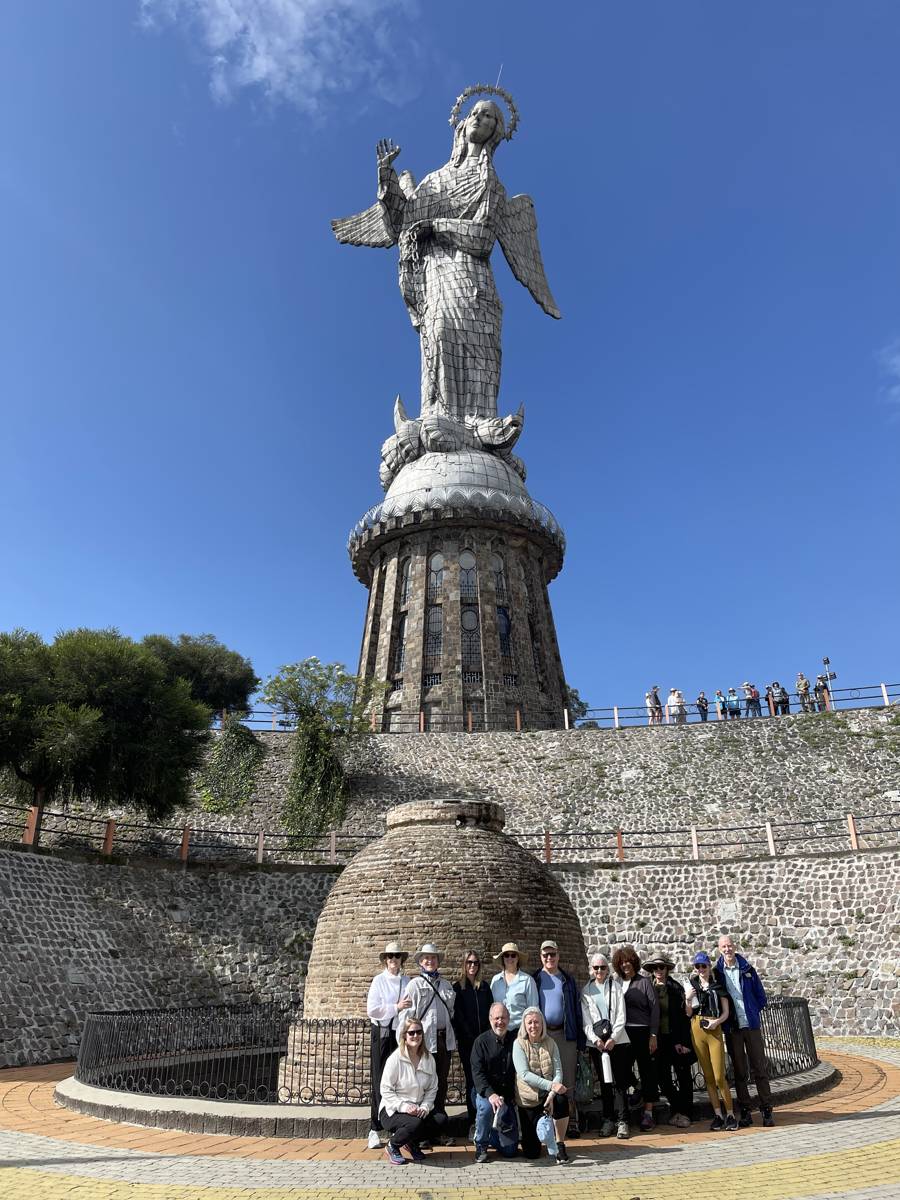
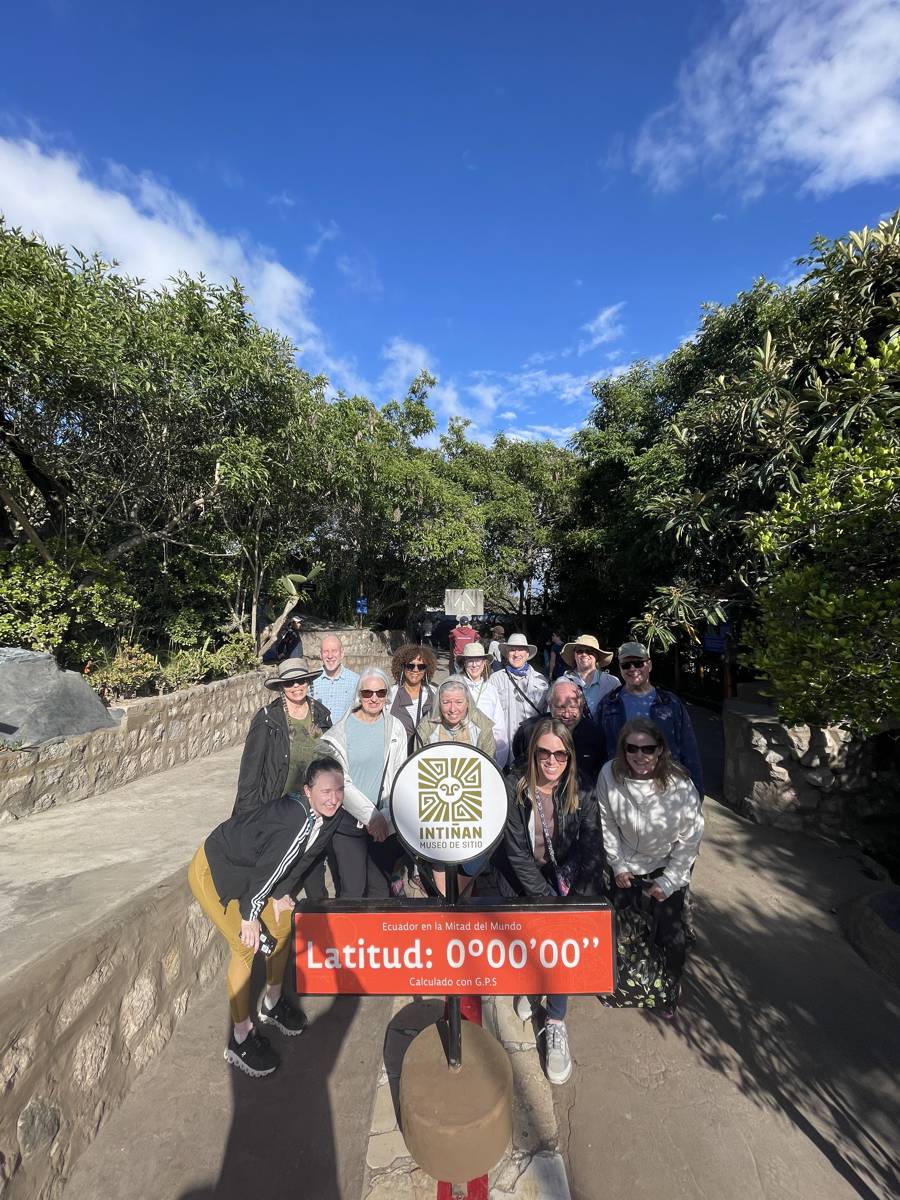
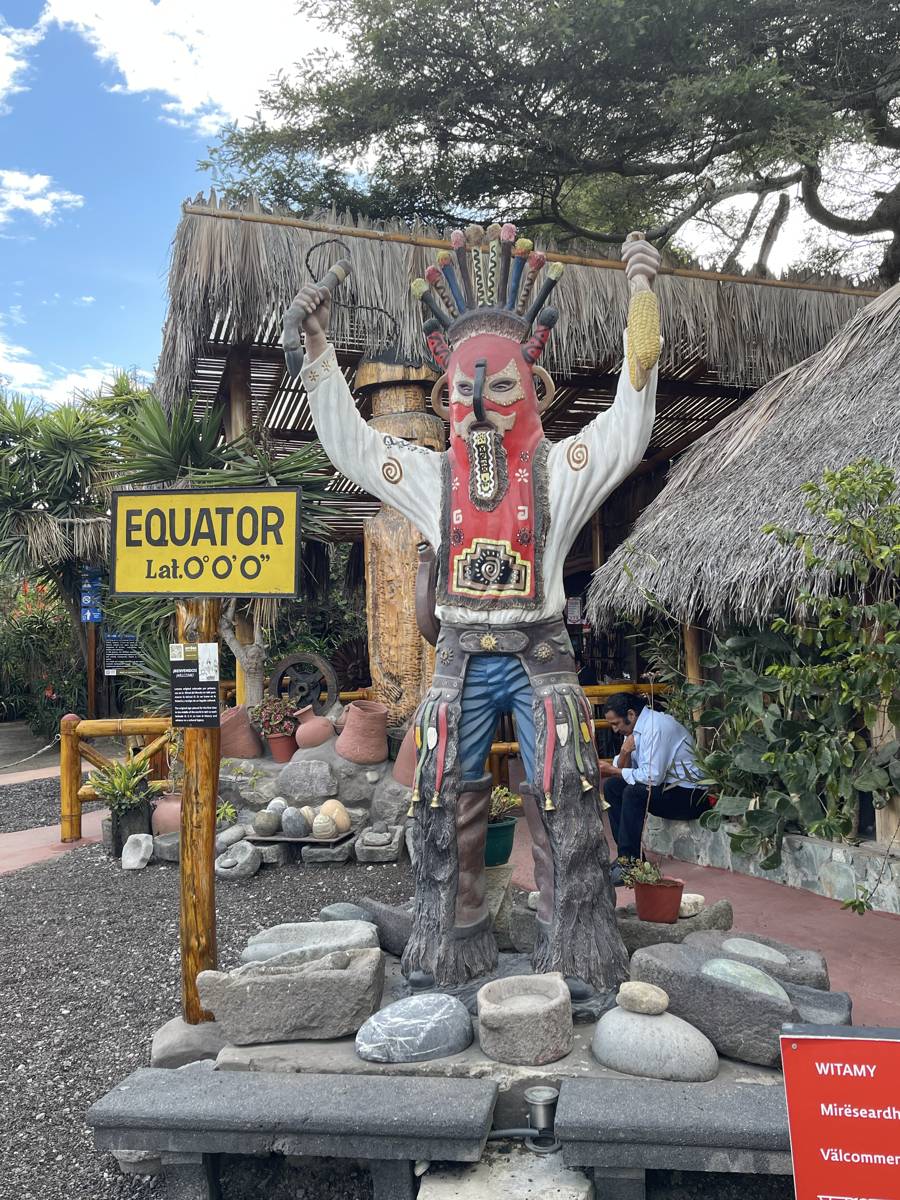
Quito is a UNESCO World Heritage Site with one of the best-preserved colonial centers in South America. A certified local guide walks you through centuries of history in a single morning. Just outside the city sits the equator line, where you can watch the Coriolis effect demonstrated live. Water spinning one direction on one side, the opposite direction two feet away. It sounds like a science class until you see it happen, and then it becomes one of those stories you tell at dinner parties for the next decade.
Guayaquil is Ecuador’s largest city, a coastal port with its own character. The Malecon 2000 boardwalk runs along the Guayas River, and Parque Seminario in the city center is famous for the iguanas that roam freely through it. A different feel from Quito, but equally worth exploring before you fly to the islands.
Either way, you arrive a day or two early. You settle in and let your body adjust. And by the time you board the flight to the Galapagos, you are rested and ready instead of jet-lagged and rushing.
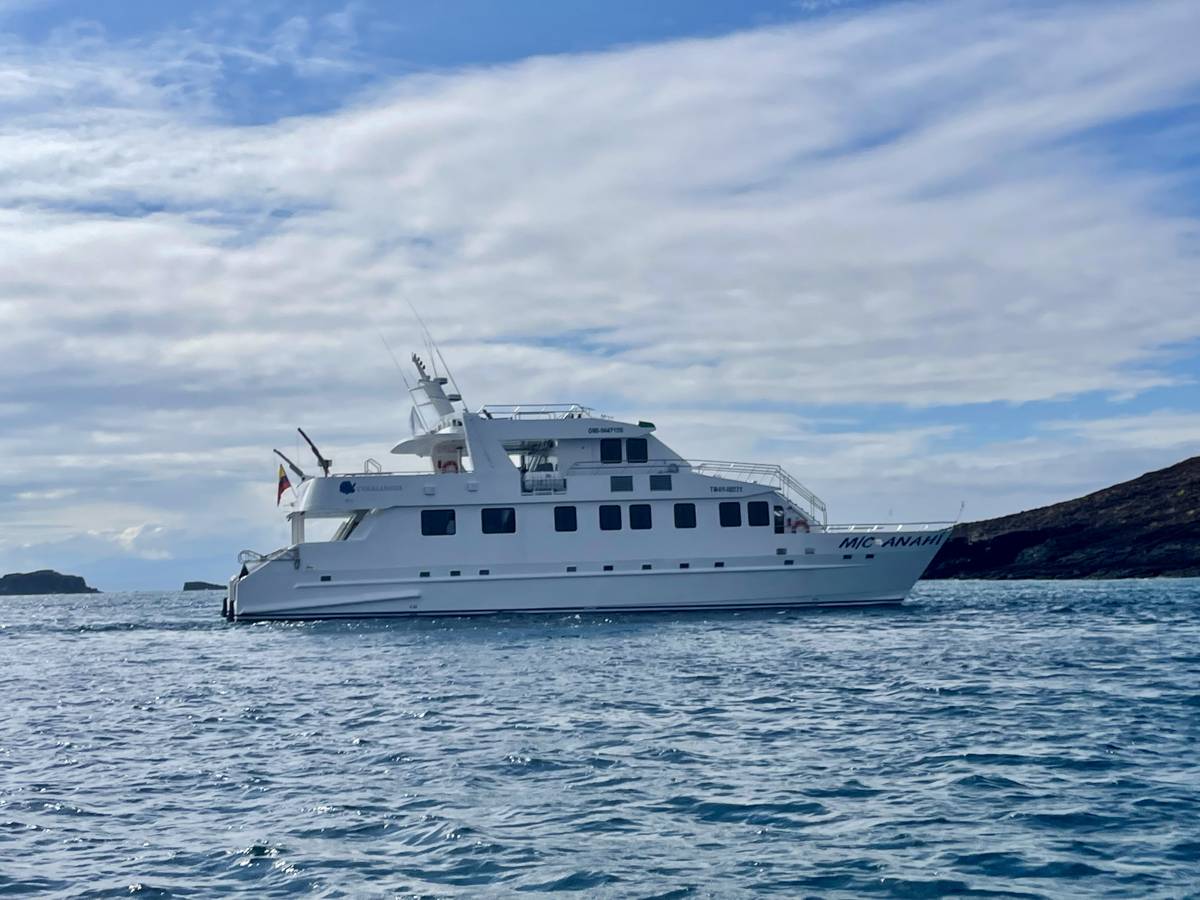
What Is It Like to Cruise the Galapagos on a Catamaran with a Naturalist Guide?
Picture two boats docked side by side at Puerto Ayora. One is a floating resort with 90 passengers, a rotating naturalist guide, assigned dining times, and a schedule that moves people on and off zodiacs in shifts all day long.
The other is the Yate Anahi.
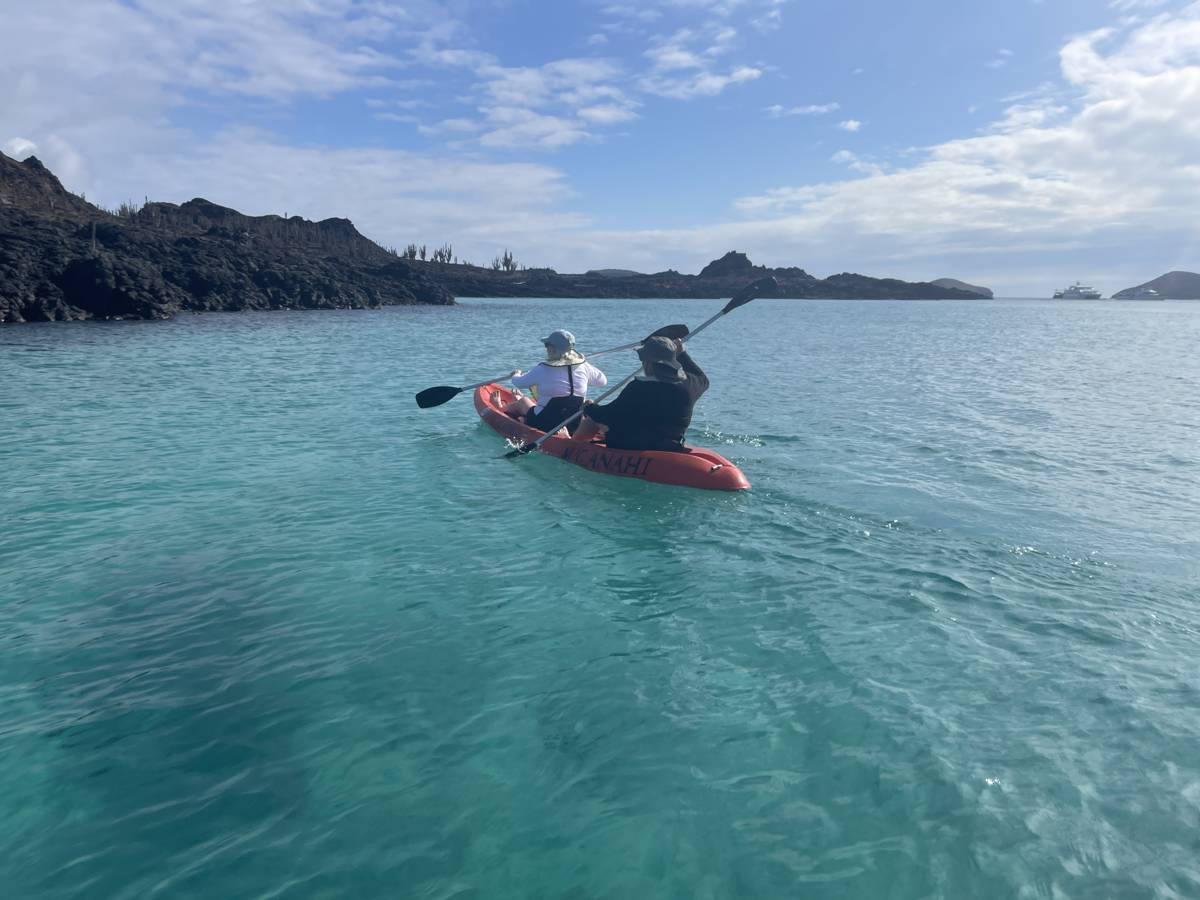
The Yate Anahi is a catamaran. Two hulls instead of one, which means more stability in the water and less motion when you are anchored overnight. If you have ever looked into a Galapagos catamaran cruise and wondered whether the boat type actually matters, it does.
A catamaran sits on the water differently than a single-hull vessel. You won’t feel it roll the same way or like you’re fighting the swells. It simply rides them.
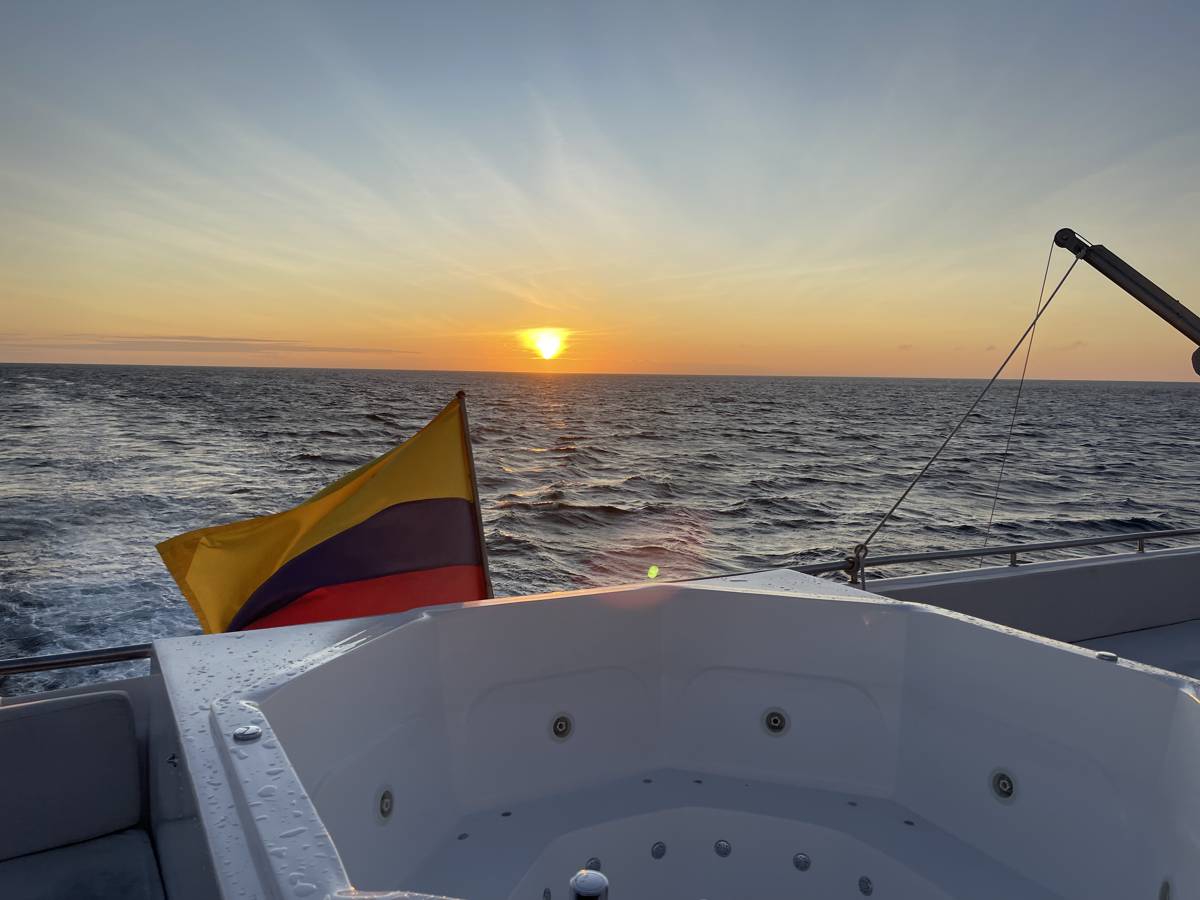
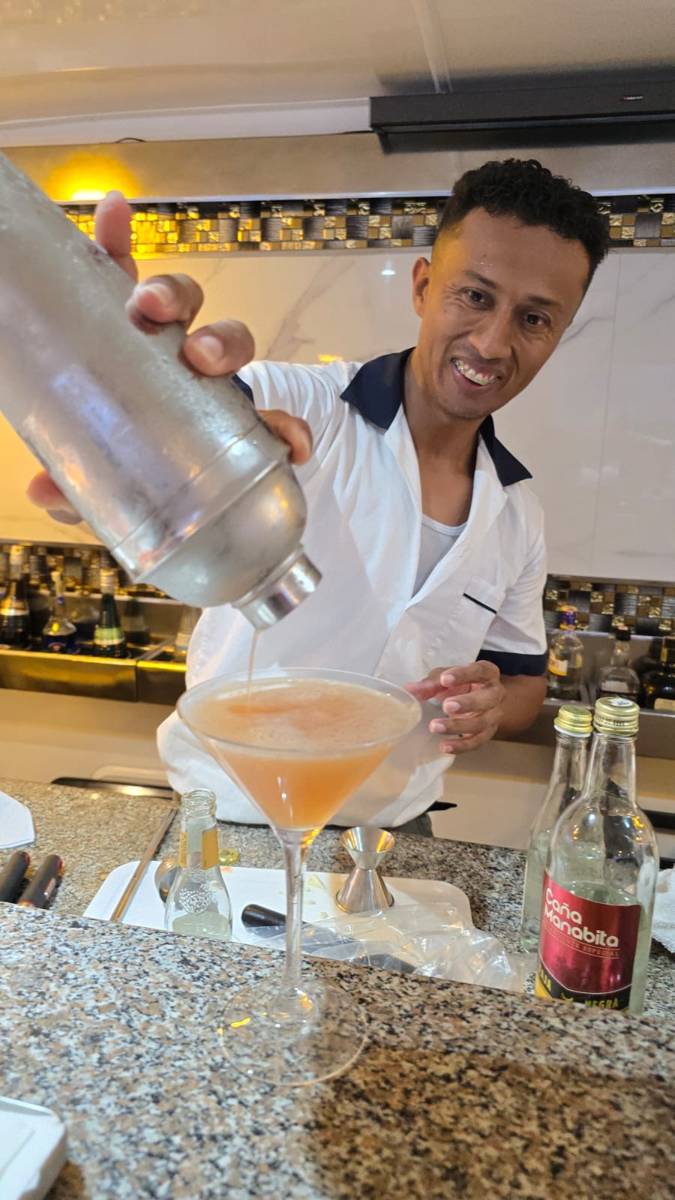
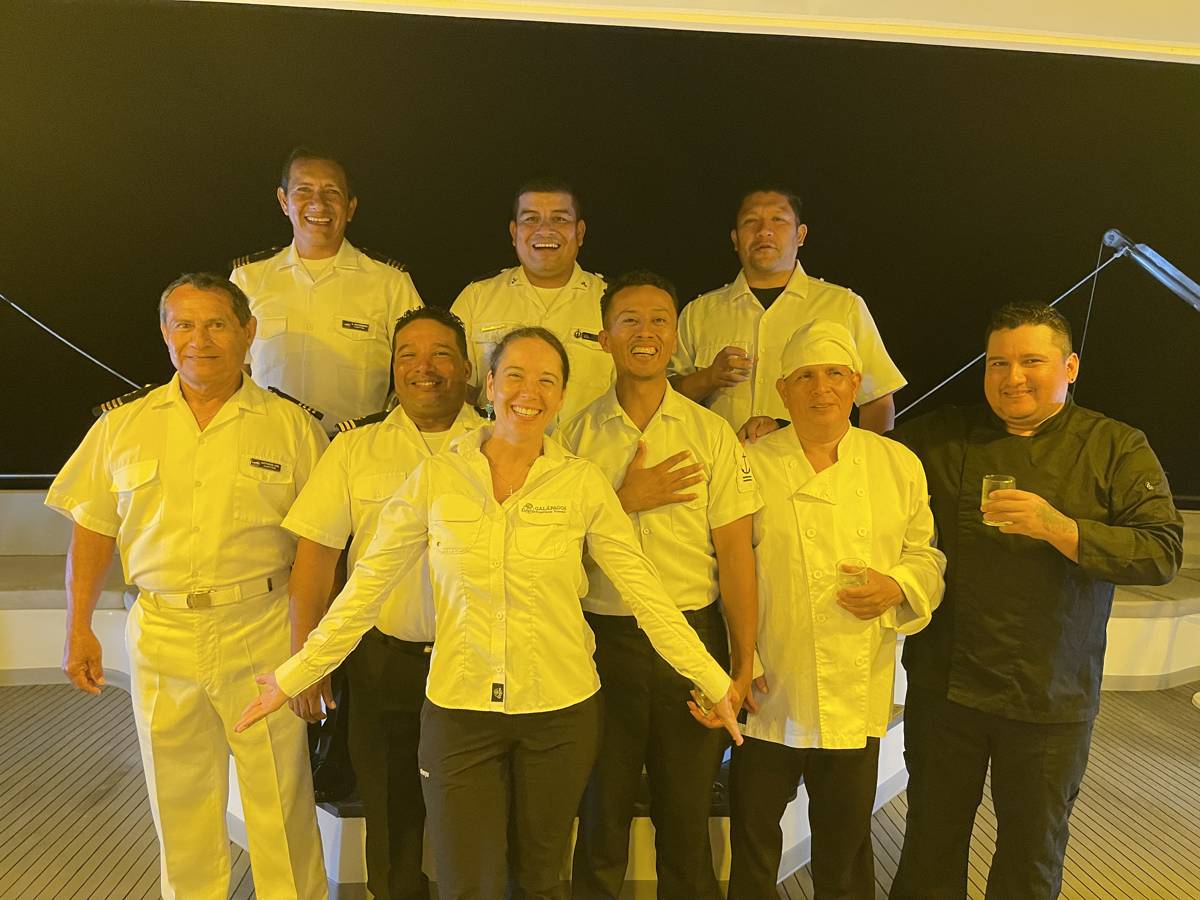
And the Yate Anahi is not roughing it. There is a bar, a hot tub, comfortable cabins, and a sundeck where half the group ends up every evening watching the islands disappear into the horizon.
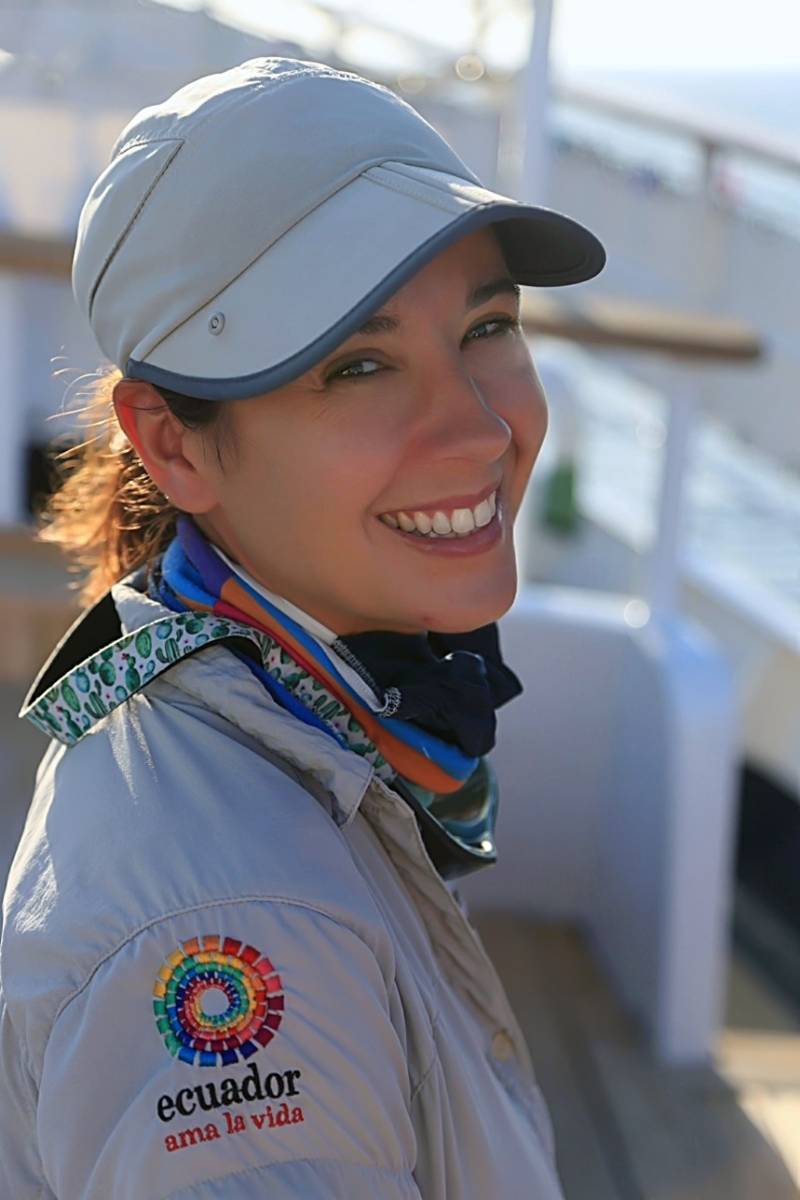
Your naturalist guide is Cornelia Besmer. Born in Switzerland, certified by the Galapagos National Park in 2017, and a full-time resident of the islands for over 15 years. She came to the Galapagos for volunteer work and never left.
She married a local galapagueño, raised a family here, and has spent nearly a decade walking these islands professionally. Cornelia eats meals with you. Debriefs every excursion on deck. Builds the story of these islands from one landing site to the next.
On a large ship, the naturalist is shared across rotating groups of 16 (the Galapagos National Park caps it at 16 per guide).
On the Yate Anahi, Cornelia is exclusively yours. She’s with you every day, and by day three she’ll know which species you are most excited about and which questions keep you up at night.
Best Time to Visit Galapagos Islands (It’s Probably Not What You Think)
The Galapagos has two seasons, and most travel sites steer you toward the wrong one.
The “dry season” runs June through November. Cooler air, choppier water, and temperatures that make snorkeling feel like a dare.
The “warm and wet season” runs December through May, and despite the name, it is when the archipelago puts on its best show.
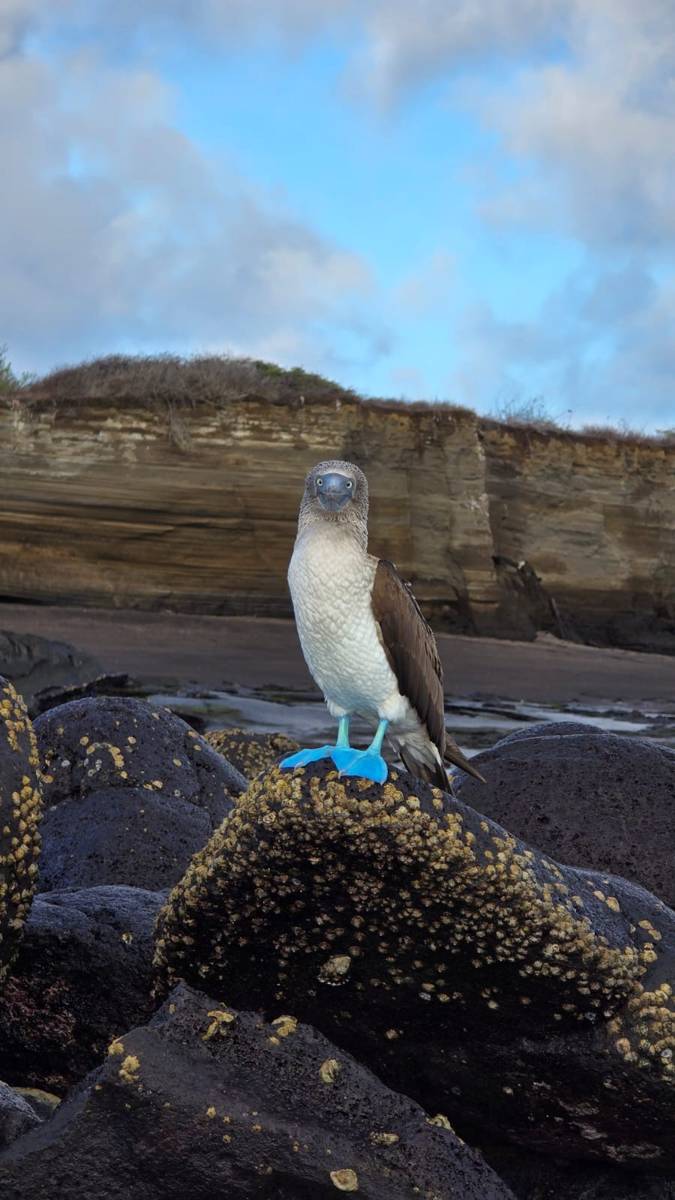
Sea turtles are nesting. Blue-footed boobies are performing their famous mating dance, high-stepping with those absurd blue feet like they are auditioning for a nature documentary. Marine iguanas turn from charcoal gray into vivid reds and greens.
The water is warm enough to snorkel without layering up like you are preparing for a polar expedition. And because fewer tourists choose this window, the islands feel quieter.
Why February Is the Sweet Spot for a Galapagos Cruise
Water temperatures hover in the upper 70s. Rain comes in short bursts, not all-day downpours. The seas are at their calmest of the entire year, which matters when you are spending seven nights on a boat.
If seasickness has ever crossed your mind while researching a Galapagos cruise, Galapagos February weather on a catamaran is as close to a guarantee of smooth sailing as the Pacific Ocean will give you.
If you are trying to decide the best time to visit Ecuador and Galapagos, skip the peak tourist crowds and skip the rough water months.
This trip’s departure is timed for the window when the animals are most active, the water is warmest, and the whole archipelago feels like it is performing just for you.
Galapagos Islands Travel Cost: What Does a Real Expedition Actually Run?
A comprehensive 10-day Galapagos cruise with a certified naturalist guide costs $9,298 per person. It includes a hotel in Quito, seven nights aboard a 16-passenger catamaran, all island excursions, internal flights, snorkeling gear, park fees, and most meals.
Before you close the tab, stay with me for a minute and look at what’s actually inside that number.
Been researching Galapagos Islands vacation cost and wondering how much a trip to the Galapagos actually runs when everything is included? This is your answer.
The Galapagos vacation cost at this level covers nearly everything from the moment you land in Quito to the moment you fly home. People searching for an all-inclusive Galapagos experience will find that this trip checks every box.
What $9,298 Covers
- Two nights at the Wyndham Quito Airport hotel
- Seven nights aboard the Yate Anahi catamaran
- A certified local guide for the Quito city tour
- A certified multilingual naturalist guide for the entire Galapagos portion
- A Cultured Travel Tour Director
- All island excursions per the itinerary
- Internal flights between Quito and the Galapagos
- Airport transfers in Quito and between the Galapagos airport and the Yate Anahi
- Snorkeling mask and fins
- The Galapagos National Park entrance fee
- The Galapagos Transit Card
- And meals: breakfast and lunch on Day 2, breakfast, lunch, and dinner on Days 3 through 9, and breakfast on departure day
What Is Not Included
- Alcoholic beverages (water, coffee, and tea are included on board)
- Travel insurance (strongly recommended)
- International airfare to and from Ecuador
- Transportation between your home and your departure airport
- Gratuity for the naturalist guide, ship crew, and other service providers (approximately $300 USD)
- Wetsuit rental, which is optional and available on board the Yate Anahi
- Any pre- or post-tour excursions
- Souvenirs, additional meals, or anything not explicitly listed above
How Does a $9,298 Trip Compare to Budget Galapagos Options?
The real trip to Galapagos Islands cost depends entirely on what is and is not included in the sticker price.
A “cheap” Galapagos cruise at $3,000 to $4,000 sounds like a deal until you realize it does not include the $100 Galapagos National Park entrance fee. Or the $20 transit card. Or the internal flight from the mainland to the islands, which runs $400 to $500 round trip. Or a naturalist guide who stays with your group, because on a 90-passenger ship you are sharing one across rotating groups. Or the snorkeling gear. Or most of the meals.
By the time you tally up the actual cost of a trip to Galapagos Islands on a budget option, you are at $6,000 to $7,000 for a trip where you are one of a hundred people waiting in line to get to shore.
How Does This Compare to Other Small Boat Galapagos Cruises?
The budget comparison is one side of the equation. The other side is what comparable small-boat expeditions actually charge. Luxury 8-day cruises on 16-passenger vessels in the Galapagos routinely run $9,490 to $12,995 per person, and that is for two fewer days than this trip. Most of those itineraries do not include time in mainland Ecuador and do not include the park entrance fee.
At $9,298 for 10 days with a named naturalist guide, two nights in Quito or Guayaquil, and nearly everything included, this trip sits below the market rate for a comparable experience while delivering more.
Cultured Travel is not a cruise line trying to fill 90 cabins. It is a small company that charters one boat, once a year, and prices it so the people who want to go actually can.
When you line up $9,298 with everything covered against $4,000 with a list of surprises waiting at the bottom, you are not comparing prices anymore. You are comparing completely different trips. And on something most people do once in a lifetime, that difference follows you home.
Small Boat vs. Large Ship vs. Land-Based: How Should You See the Galapagos?
The boat you choose will shape your Galapagos experience more than any other single decision.
If you have been comparing Galapagos vacation packages and they all blur together, it is because nobody is breaking down the actual differences between a Galapagos cruise on a small ship versus a large one versus skipping the boat entirely.
Large Cruise Ships (90 to 100 Passengers)
You’ll get infrastructure. A pool. A bar. A buffet. But you’ll also get rotated through excursion groups, because the Galapagos National Park only allows 16 people per naturalist guide at a landing site.
That means on a 90-passenger ship, there are six groups rotating through the same sites at different times. You might see Bartolome Island with Group C while Group A is at a different site entirely.
The naturalist is good, but they are managing logistics more than building a narrative. And the ship cannot access the smaller landing sites that the animals prefer because the draft is too deep.
Land-Based Galapagos Island Hopping
You stay in a hotel on Santa Cruz or San Cristobal and take day boats to nearby islands.
It sounds flexible, but you spend hours on open-water transfers each day, you can only reach a handful of islands, and you miss the ones that are too far for a day trip.
Fernandina, Santiago, and Bartolome are effectively off the table.
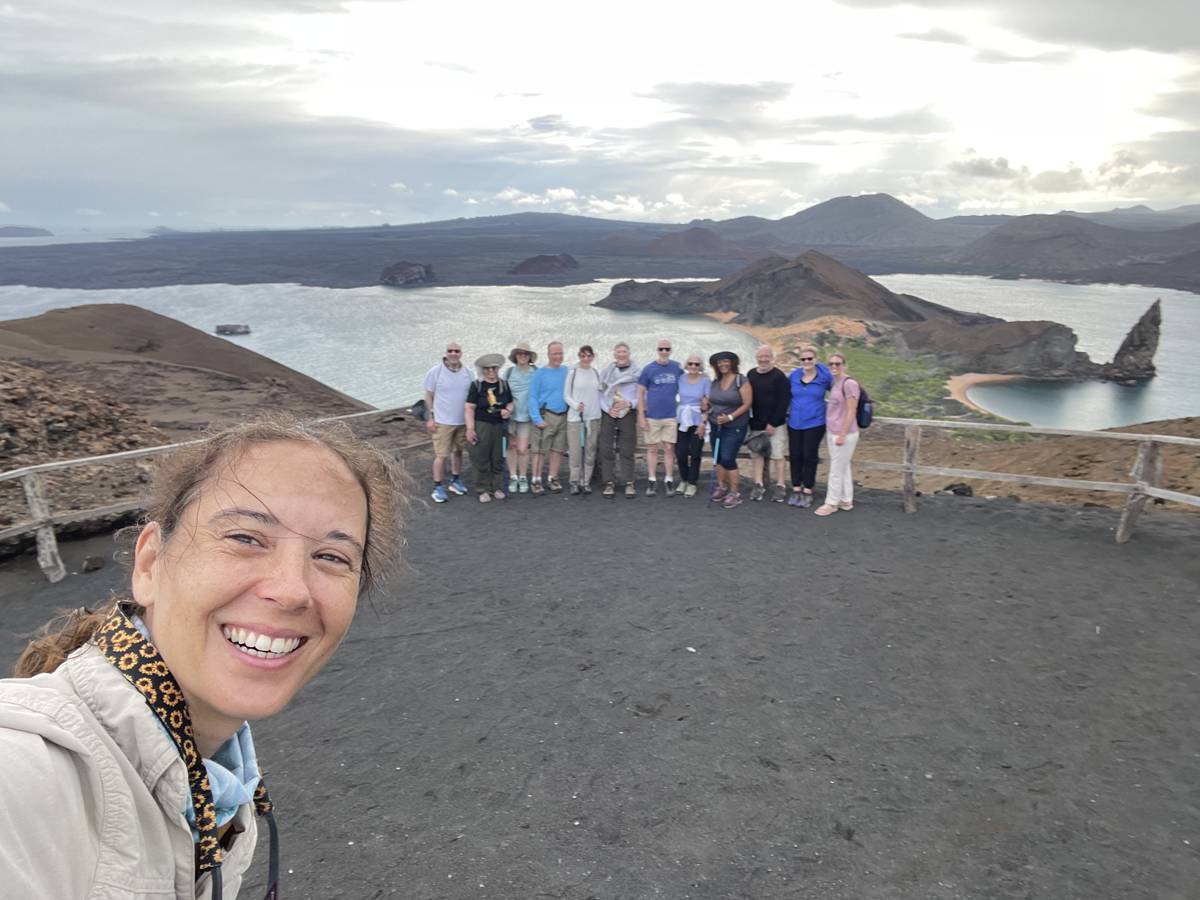
That means no flightless cormorants, no fur seals at James Bay, and no Pinnacle Rock.
You see a fraction of the archipelago and spend a lot of time on rough water getting there.
Small Boat Cruise (16 Passengers or Fewer)
This is the sweet spot.
On the Yate Anahi, you have 16 passengers and one certified naturalist guide who is exclusively with your group for the entire trip. You visit eight islands across seven nights.
You access landing sites that large ships cannot reach. You are on shore within minutes instead of waiting for five other groups.
And because you are on a catamaran, you get better stability, less seasickness, and a wider deck for watching the islands slide by after dinner.
The Galapagos National Park set the group limit at 16 for good reason. Sixteen is the number where everything clicks. You can ask questions. The naturalist adjusts based on what the group cares about.
The Yate Anahi will give you the trip to Galapagos you’ve been dreaming about.
Galapagos Wildlife: What You Will Actually See (and Why It Matters)
Everyone says the Galapagos Islands are the only place on Earth where the animals have not learned to fear humans.
That sentence gets repeated so often it sounds like a brochure.
But just wait until you’re standing three feet from a blue-footed booby that is mid-dance, feet lifting in alternating slow motion like a vaudeville act, and it will not so much as glance at you.
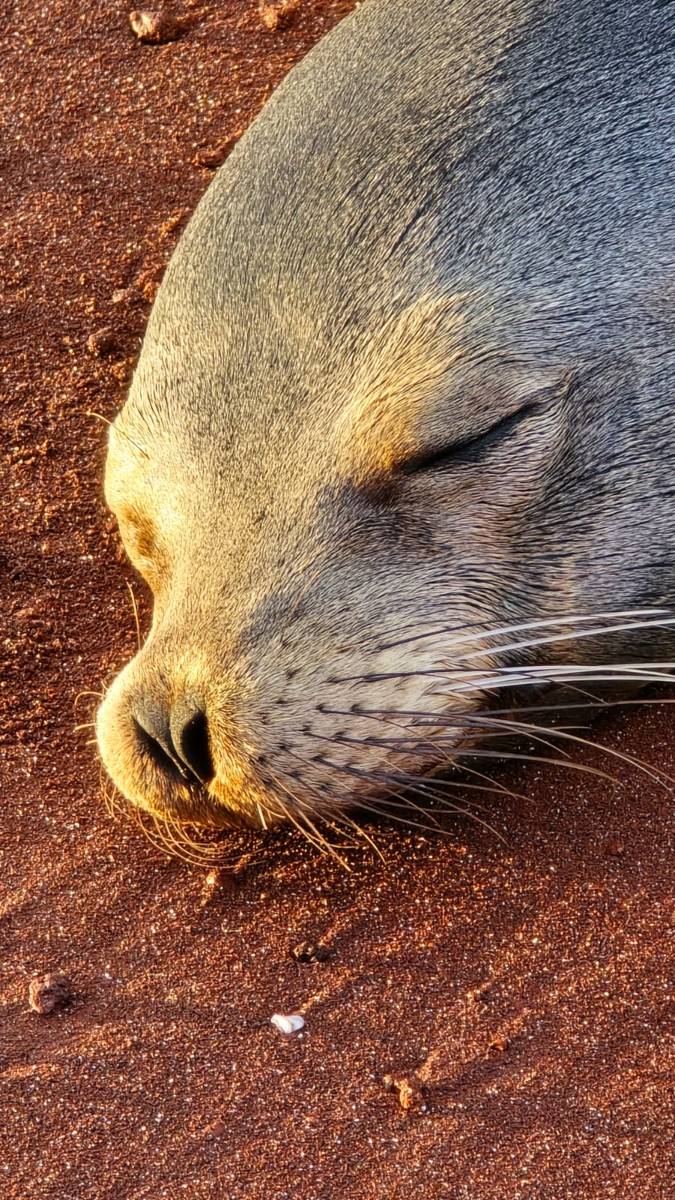
You will swim alongside a sea turtle the size of a coffee table and it will keep going about its business like you are scenery. A sea lion pup may swim up to your mask while you are snorkeling and stare at you with what can only be described as curiosity bordering on amusement.
No fences. No glass. No scheduled feeding times.
The animals exist on their terms, and you happen to be visiting their living room.
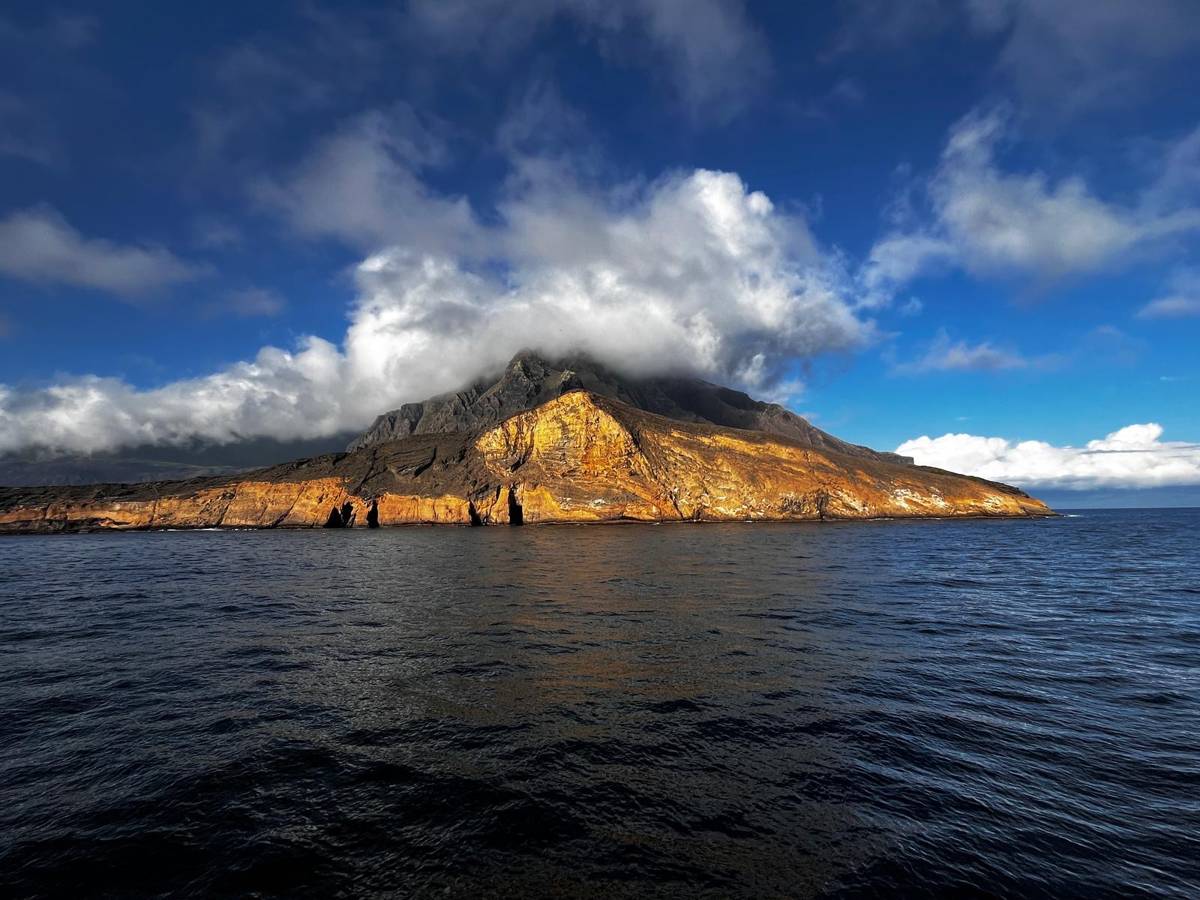
Cornelia explains why any of it matters. Why the marine iguanas on Fernandina have evolved to sneeze salt. Why the frigatebird’s inflated red throat is one of the most expensive signals in the animal kingdom. Why Darwin watched a finch on these islands and unlocked the theory of natural selection that changed biology forever.
Galapagos Islands wildlife is unlike anything else on the planet because nearly every species you encounter is endemic, found here and nowhere else.
On this itinerary you visit eight islands:
- Santa Cruz
- Isabela
- Fernandina
- Santiago
- Rabida
- Sombrero Chino
- Bartolome
- North Seymour
Each island has its own species, its own geology, its own story.
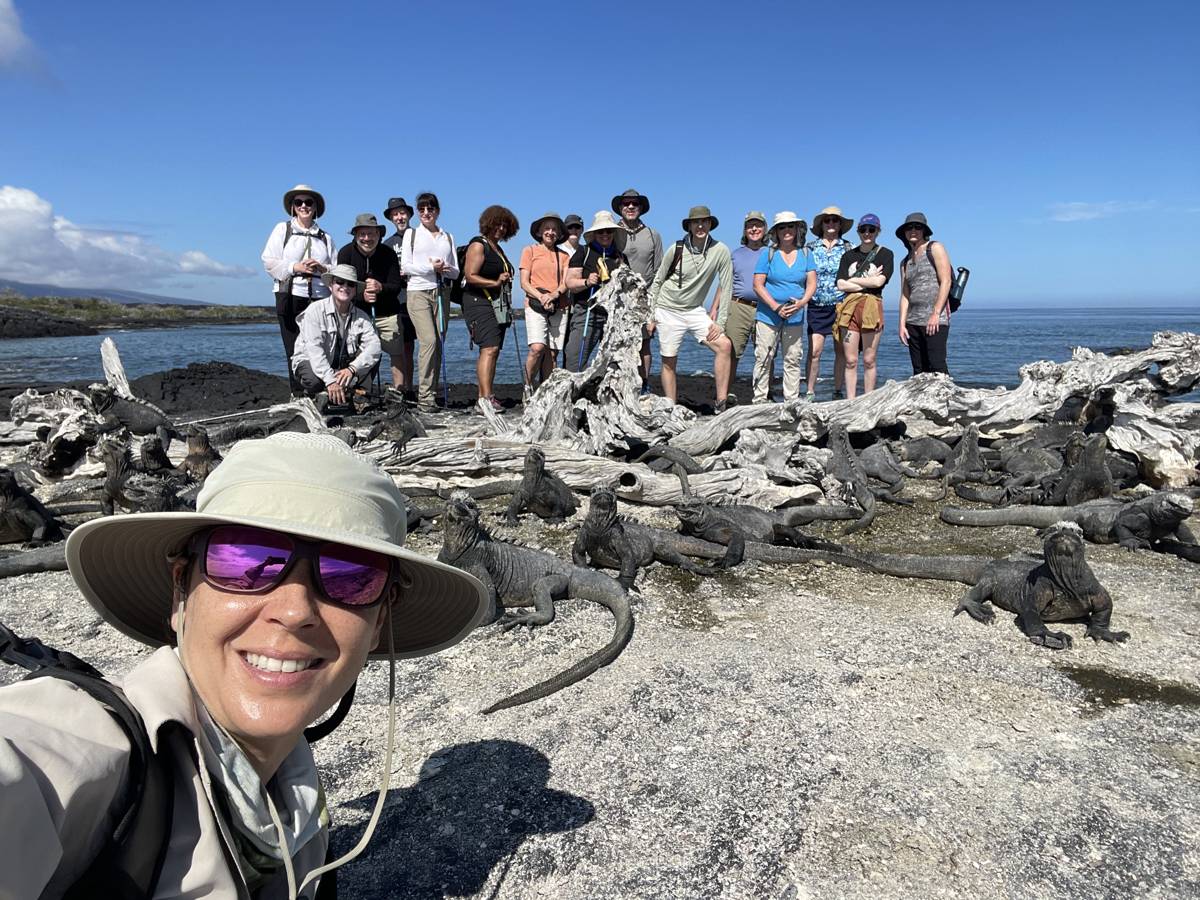
The giant tortoises at the Charles Darwin Research Station on Santa Cruz. The flightless cormorants on Fernandina, a bird that evolved away from flying because it had no predators. Galapagos penguins on Bartolome, the only place in the Northern Hemisphere where penguins exist in the wild. Marine iguanas sunning themselves on black lava. Sally Lightfoot crabs picking their way across rocks in colors so vivid they look painted.
How Many Days Do You Really Need in the Galapagos?
Five days gives you one or two islands, a few snorkeling sessions, and a highlight reel that barely scratches the surface. You will see animals, but you will not understand the archipelago.
It is like visiting Rome for a day and saying you have been to Italy.
Seven days is the standard cruise package. It gets you to more islands, but the pacing is tight. You are moving fast. The naturalist is building the story, but you are flipping pages before you have finished reading.
Why 10 Days Is the Right Amount of Time for this Trip?
This trip gives you two days in Quito to acclimate and explore Ecuador’s capital, then seven nights in the archipelago with enough time at each island to actually absorb what you are seeing.
The narrative builds. The species start to connect.
By day six you are noticing differences between the marine iguanas on Fernandina and the ones on Santiago without the naturalist pointing them out. That is when the Galapagos stops being a trip and starts being an education.
The Shape of the Trip
Day 1: Arrive Quito. Settle into the Wyndham Quito Airport. Rest, adjust to the altitude, and meet your group.
Day 2: Guided tour of historic Quito with a certified local guide. Visit the equator and see the Coriolis effect. The city itself is a UNESCO World Heritage Site.
Day 3: Fly to the Galapagos. Board the Yate Anahi. Cornelia meets you and the expedition begins.
Days 4-9: Six days of island landings, snorkeling, and wildlife encounters across eight islands. Santa Cruz, Isabela, Fernandina, Santiago, Rabida, Sombrero Chino, Bartolome, and North Seymour. Each island reveals something the last one set up.
At some point during the sailing between islands, the captain marks the moment you cross the equator with a toast on deck.
Day 10: Disembark. Fly back to Quito. Departure, or stay longer if you have arranged a post-tour extension.
Who Books a Naturalist-Led Galapagos Cruise?
The kind of person who books this trip wants to understand what they are looking at, not photograph it and move on. Maybe you watched a nature documentary last year and thought, “I want to actually be there.”
Maybe you have been on a cruise before and you know the difference between being a passenger and being part of something real.
You’re curious. You’re comfortable investing in something meaningful.
You would rather ask the naturalist why the frigatebird evolved that way than simply point your camera at it. You want to snorkel with sea turtles, not watch someone else’s GoPro footage.
Whether you are looking for a Galapagos trip for couples, traveling solo, or bringing a small group of friends, the boat is intimate enough that everyone becomes part of the same story by day two.
This trip is designed for adults who want an immersive educational experience in one of the most extraordinary ecosystems on the planet. The pace is active but not punishing.
You will hike on volcanic terrain, climb in and out of small boats to and from the catamaran, and snorkel in open water. Alternatives are available for rigorous activities, and you can always opt to relax on the boat if a particular excursion is not for you.
If you are researching Galapagos tours for seniors or Galapagos trips for seniors and wondering whether this kind of trip works for active adults over 60, the answer is yes.
Galapagos cruises for seniors work best on a small boat where the pace can flex, the shuttling to and from the islands is quick, and the naturalist guide knows every person’s comfort level by name.
How fit do you need to be for the Galapagos? If you can walk comfortably for 60 to 90 minutes at a time on uneven ground, you will be fine. If you have mobility concerns, reach out and Cultured Travel will give you a straight answer about what is manageable and what is not.
Frequently Asked Questions About Galapagos Travel
How much is a trip to the Galapagos?
$9,298 per person for this 10-day trip. That covers your hotel in Quito, seven nights aboard the Yate Anahi catamaran, a certified naturalist guide, all island excursions, internal flights, snorkeling equipment, the Galapagos National Park entrance fee, the transit card, and most meals. International airfare, alcohol, travel insurance, gratuity (approximately $300), and optional wetsuit rental are not included.
When is the best time to visit the Galapagos?
The warm and wet season, December through May, is the best time for wildlife encounters and snorkeling. Water temperatures are warmest, the seas are calmest, and the animals are most active. February is the sweet spot: sea turtles are nesting, blue-footed boobies are in mating season, marine iguanas are at their most colorful, and the islands are green and lush. This trip is timed for exactly that window.
Is a Galapagos cruise worth it?
Absolutely, if wildlife access matters to you. A cruise is the only way to reach the most remote islands in the archipelago. Land-based trips limit you to a handful of nearby islands and spend hours on open-water day-boat transfers. A small boat cruise gives you eight islands over seven nights, with a naturalist who builds the story from start to finish. The Galapagos is a once-in-a-lifetime destination for most people, and the difference between a cruise and a land-based trip is the difference between seeing the highlights and understanding the whole picture.
Do I need to be physically fit for a Galapagos cruise?
Moderately. You will hike on volcanic terrain, climb in and out of zodiacs, and snorkel in open water. The pace is active but not extreme. If you can walk comfortably for 60 to 90 minutes on uneven ground with breaks, you will be fine. Alternatives are available for more rigorous activities, and you can always opt to relax on the boat.
Will I get seasick on a Galapagos cruise?
Seasickness is possible, but much less likely on this trip because the Yate Anahi is a catamaran, which is significantly more stable than single-hull vessels, and the trip runs in February when Galapagos seas are at their calmest. The two-hull design rides swells instead of rolling through them. For context, Jewel Rozanski, managing partner of Cultured Travel, typically gets carsick on winding roads and did not get seasick once aboard the Yate Anahi. If seasickness has ever been a concern for you, a catamaran in February is as close to smooth sailing as the Pacific will offer.
What is the difference between a small boat and a large ship in the Galapagos?
The main differences are group size, guide exclusivity, and access to remote landing sites. The Galapagos National Park caps group size at 16 per naturalist guide. On a 16-passenger boat like the Yate Anahi, the guide is exclusively yours for the entire trip. On a 90-passenger ship, you are divided into rotating groups and may not have the same guide each day. Small boats can also reach landing sites that large ships cannot due to draft restrictions.
What is the Yate Anahi?
A 16-passenger catamaran that serves as your floating home for seven nights in the Galapagos. Cultured Travel charters it exclusively for your group. It has comfortable cabins, a sundeck, and a dining area where the naturalist guide debriefs each day over meals. The catamaran design provides better stability than single-hull vessels, which matters when you are spending a week on open water.
What should I pack for a Galapagos cruise?
Quick-dry clothing in light layers. Water shoes or sandals with grip for wet landings. A rashguard or light long-sleeve for sun protection while snorkeling. Reef-safe sunscreen (the National Park takes this seriously). A hat, sunglasses, and a light rain jacket for afternoon showers. Snorkeling mask and fins are included, but wetsuit rental is available on board if you want extra warmth. Bring a waterproof bag for your phone or camera on zodiac rides.
What makes this different from other Galapagos tours?
Group size, guide consistency, and who is actually running the trip. Most Galapagos cruises pack 90 passengers onto a ship and rotate naturalist guides at different stops. On the Yate Anahi, there are 16 passengers and one certified multilingual naturalist, Cornelia Besmer, who has lived in the Galapagos for over 15 years and stays with your group from the first island landing to the last. And every Cultured Travel departure includes a tour director who is on the boat, at the landing sites, and at the dinner table. Most tour companies hand you a guide and a ticket. Cultured Travel sends someone who helped build the itinerary.
Do I need travel insurance for the Galapagos?
Strongly recommended. The Galapagos Islands are remote and medical facilities are limited, so evacuation coverage gives you real peace of mind. Most policies for a 10-day trip are affordable relative to the cost of the trip itself. Cultured Travel can point you toward reputable providers.
Is this trip customizable?
Not typically. The itinerary is fixed, and that is by design. Cultured Travel has refined this route based on which islands deliver the most meaningful wildlife encounters and the best flow between sites. You are not buying a template. You are joining an expedition that has been tested and improved over multiple departures.
What is included in the trip price?
Nearly everything. Two nights hotel in Quito. Seven nights aboard the Yate Anahi. Certified Quito city guide. Certified multilingual naturalist guide for the Galapagos. Cultured Travel Tour Director. All excursions. Internal flights. Airport transfers. Snorkeling gear. Galapagos National Park entrance fee. Transit card. Most meals throughout the trip. Not included: international airfare, alcohol, travel insurance, gratuity (approximately $300), optional wetsuit rental, and pre- or post-tour excursions.
How many days do you need in the Galapagos?
Ten days is the ideal length for a complete Galapagos experience, including time on mainland Ecuador to acclimate and two or three days to reach the remote western islands most short cruises skip. Five-day cruises cover a handful of islands but miss Fernandina, Santiago, and Bartolome entirely. This trip runs 10 days: two nights in Quito and seven nights visiting eight islands aboard the Yate Anahi.
What wildlife will I see in the Galapagos?
The Galapagos Islands are home to species found nowhere else on Earth. On this itinerary you can expect to encounter:
- Blue-footed boobies (mating dance in full swing during February)
- Giant tortoises at the Charles Darwin Research Station
- Marine iguanas on volcanic shorelines
- Galapagos sea lions on beaches and swim platforms
- Galapagos penguins (the only wild penguin north of the equator)
- Frigatebirds with inflated red throat pouches
- Sea turtles (nesting season in February)
- Flightless cormorants on Fernandina
Your certified naturalist guide connects what you are seeing to the evolutionary biology behind it.
Do I need a visa to visit the Galapagos?
No. U.S. citizens receive a 90-day tourist stay upon entering Ecuador with a valid passport. No separate Galapagos visa is required. You will need to pay the Galapagos National Park entrance fee ($200 per adult, cash only) and purchase a $20 Transit Control Card at the airport before your flight to the islands. On this trip, both fees are included in the price.
What is the Galapagos National Park entrance fee?
$200 per adult and $100 for children under 12, payable in cash (U.S. dollars only) at the Galapagos airport upon arrival. The fee doubled in August 2024 after holding at $100 for 26 years. It funds conservation, wildlife protection, and community development across the islands. On this trip, the entrance fee is included in the $9,298 price.
Can I snorkel if I am not a strong swimmer?
Yes. Snorkeling in the Galapagos is generally calm, especially during the warm season when this trip runs. Mask and fins are provided. A wetsuit is available for rent on board for extra buoyancy and warmth. Your naturalist guide is in the water with you, and you are never required to participate. If a session feels beyond your comfort level, you can stay on the boat.
Is the Galapagos safe for travelers?
Yes. The Galapagos Islands are one of the safest travel destinations in South America. The archipelago is a heavily regulated national park with strict visitor management. On this trip you travel with a certified naturalist guide, a Cultured Travel tour director, and a boat crew who know these waters. You are never navigating unfamiliar territory alone.
Ready to See the Galapagos the Way Darwin Wished He Could?
You have read the itinerary. You know what it costs. You know who is leading the trip, who is on the boat with you, and what makes this different from the 47 packages that show up on the first page of Google.
Sixteen spots. One departure.
Reserve your spot on the Galapagos trip.
If you have questions, reach out to us!